



On Saturday 25 April 2026, Australia will mark the 111th anniversary of the Gallipoli landings and commemorate all those who have served in times of war and peace. ANZAC Day invites us to reflect on the immense sacrifices made in service to the nation, often at profound personal cost. In the years following Gallipoli and subsequent conflicts, there has been growing recognition of the psychological injuries carried by soldiers long after the fighting ends.
Yet the trauma experienced by nurses at this time and subsequent wars, who have worked alongside them in war zones, field hospitals and humanitarian crises, has historically been minimised, overlooked or rendered invisible. Kathryn Anderson explores the burden and the impact of service on nurses during the ANZAC campaign who have borne witness to war.
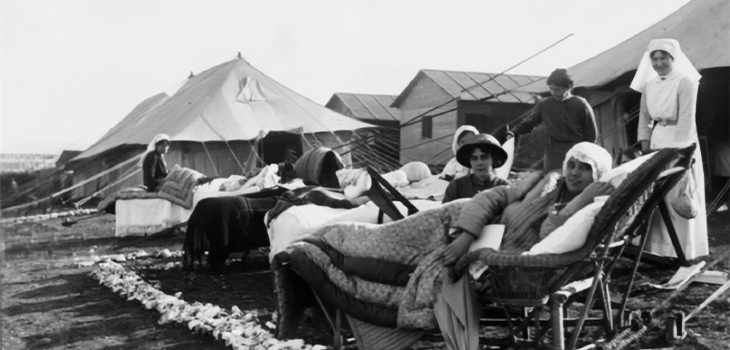
More than 3,000 Australian nurses served during the First World War, including in the Gallipoli campaign in Turkey. From the moment Australian troops landed on 25 April 1915, nurses were confronted with the harsh and confronting realities of modern warfare. Working aboard hospital ships and in makeshift wards, often under the constant threat of attack, they cared for hundreds of wounded soldiers evacuated directly from the front. Many arrived with devastating injuries – severely infected wounds, bodies torn by shrapnel, or injuries so extensive that survival was unlikely.1,2
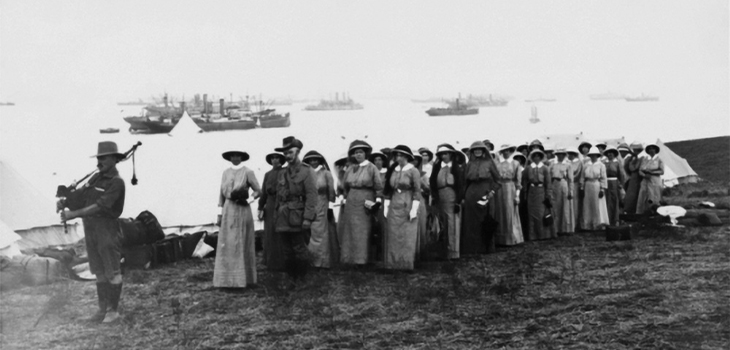
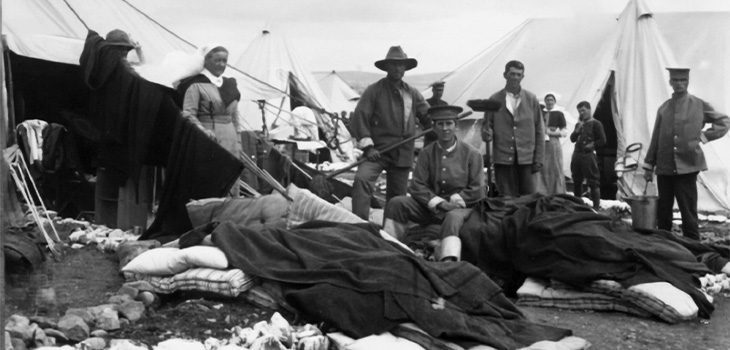
Conditions were harsh and unrelenting. Nurses worked in unsanitary environments with inadequate supplies, limited clean water, and severe staff shortages. The imbalance between the number of patients and nurses left little time for comfort or reassurance. Men frequently died frightened and alone. For nurses trained to provide holistic care, the inability to ease suffering created a profound moral distress – one that would haunt many long after the war ended.1,2
From 1916, Australian nurses moved even closer to the fighting, serving in Casualty Clearing Stations (CSS) on the Western Front. These units operated almost on the front line and were among the most dangerous environments in which nurses could serve. Soldiers arrived within hours of injury – bloodied, shattered by artillery, blinded by gas, or dying from massive trauma. One CCS, staffed by just 20 nurses, treated more than 2,800 patients in the first 18 hours of a major offensive.1,3
The pace was relentless. Nurses worked extreme hours, often through the night and into the following day with only brief breaks. War oscillated between long periods of tense waiting and moments of overwhelming terror.1

Their words, preserved in diaries and letters, offer rare insight into the psychological toll of their service. Sister Mary Tilton recalled starting duty at 8pm and working continuously until midday the next day, barely pausing to eat. She wrote of injuries so horrific that “to watch them dying was ghastly,” later confessing, “I cannot speak of it. I want to scream and scream.”
Sister Connie Keys wrote to her mother, admitting, “I am only afraid of being afraid.” Lieutenant Harold Williams, wounded in 1918, described nurses as: “pale and weary beyond words, hurried about. That these women worked their long hours among such surroundings without collapsing spoke volumes for their willpower and sense of duty. The place reeked with the odours of blood, antiseptic dressings, and unwashed bodies … They saw soldiers in their most pitiful state – wounded, blood-stained, dirty, reeking of blood and filth.4
Nurses spent hours triaging wounds described as “ghastly,” bloody, and clogged with mud and grit and gangrenous limbs – “slimy and green”. Facial injuries were almost impossible to manage. Septic poisoning was a constant threat. Many men endured surgery with little or no anaesthetic, gripping nurses’ arms so tightly from pain that one nurse recalled being left “black and blue with bruises.” The suffering did not end with physical injury. Disease spread rapidly from the trenches – measles, influenza, lice, placing nurses themselves at continual risk.3
Despite this, while “shell shock” among soldiers gradually entered medical and public understanding, nurses’ trauma remained largely invisible. Their distress was frequently dismissed as exhaustion, debility, or “overstrain.” Historian Kayla Campana notes that women’s psychological suffering was often labelled “hysteria,” reflecting deeply entrenched gendered assumptions that minimised genuine trauma.3
The diagnosis of shell shock became firmly coded as masculine. Early in the war, men suffering psychological trauma were sometimes labelled as experiencing “male hysteria,” but as case numbers grew, military and medical authorities became increasingly uncomfortable with the association between male trauma and a condition considered feminine. “Shell shock” emerged as a more acceptable, masculine-sounding diagnosis- one that obscured its similarities to hysteria and reinforced a separation between male and female suffering.3
For nurses, no equivalent space existed. Even when women displayed the same symptoms – nightmares, emotional collapse, withdrawal, despair – the diagnosis of shell shock rarely applied. Instead, their suffering was framed in ways that preserved ideals of nursing as selfless, sacrificial, and morally pure.
For many nurses, returning home offered little relief. Social norms discouraged open discussion of mental health, particularly for women. Many married soon after their return and left the workforce, effectively disappearing from public and professional memory. Isolated from others who shared their experiences, they carried their trauma in silence.1,2,3
Like many male combatants, nurses faced stigma and shame around mental illness. With few official records, much of what we know comes from private writings never intended for public view – raw attempts to make sense of experiences that defied comprehension.2,3
From these writings it is believed some nurses’ took their own lives. Their deaths were recorded under vague or ambiguous causes now believed to conceal suicide. Contemporary observers struggled to reconcile the idea of a woman – particularly a nurse – ending her life. Medical professionals, military leaders, families, and the press often described such deaths as temporary lapses, or heroic sacrifices, maintaining the image of nursing as a profession untouched by psychological injury.2,3
Although the term “shell shock” was given to explain the traumatic impacts during the First World War, it was not until 1980 that these injuries were formally recognised as Post Traumatic Stress Disorder (PTSD).5 Nurses’ war-related trauma, however, was acknowledged only years later, largely through studies of Vietnam War nurses in the late twentieth century. For those who served in earlier conflicts, their psychological injuries remained unseen and unnamed.
On ANZAC Day, we honour those who served and sacrificed for Australia. To truly do so, we must broaden our remembrance to include the nurses who stood beside the ANZACs, shouldering the burden of care amid unimaginable suffering. They were not only witnesses to war but, in many respects, its casualties – bearing psychological wounds that went unrecognised for decades.
Their experiences remind us that the costs of war extend far beyond the front line. As nurses and midwives today continue to work in crisis and conflict settings around the world, the legacy of World War I nurses challenges us to acknowledge, support, and care for those who care for others. This ANZAC Day, their unseen wounds deserve to be remembered.
References:
- McLeod F, Crotty M. (2021). “I want to scream and scream”: Australian nurses on the Western Front were also victims of war. The University of Queensland. https://doi.org/10.64628/AA.etgeqhv7p
- Campana K. (2022). Sacrificing Sisters: Nurses’ Psychological Trauma from the First World War, 1914–1918. University of Central Florida. https://stars.library.ucf.edu/etd2020/983
- Department of Veterans’ Affairs. Australian Army Nursing Service. Anzac Portal. https://anzacportal.dva.gov.au
- Australian War Memorial. (1918). Papers of Lieutenant Harold Williams. AWM Collection.
- Friedman MJ. Post-traumatic stress disorder: history of the concept. In: Friedman MJ et al., editors. Handbook of PTSD: Science and Practice. New York: Guilford Press; 2013.





2 Responses
Thank you for such an interesting essay. Today, ANZAC Day, I watched the excellent documentary ANZAV Lemnos 1915 on SBS on Demand. An excellent focus on nurses. It quoted Sister Rachel Pratt several times. She later won a Military Medal (should have been Cross) on the Western Front. Contrary to the then ADB entry on her, since revised, she suffered great mental trauma following the war, which I discovered in the Edith Cavell Trust papers in the NAA. Thankfully the ABD quietly revised the entry.
However the post war experiences varied very greatly and defy generalisations, as I showed in an article in the Victorian Historical Journal Nov 2017. One possibly two of the 60 studied committed suicide, some suffered unhappy marriages, some had poor health, some lived into their 90s, some flourished personally and professionally. Here is the link to the issue the article appears in: https://www.historyvictoria.org.au/wp-content/uploads/2019/09/VHJ-Vol-88-No-2-Nov-2017.pdf
Thank you Kathryn, Always good to remind people about the significant role nurses played in World War 1, and continue to undertake in todays Armed Forces. Lest We Forget.