

“If my death can help someone else, then that is my reasoning.”
The man nurse Jessica Amsden was speaking with was dying. Motor neurone disease (MND) had taken his mobility and ability to breathe – but not his willingness to help others.“He just kept coming back to, ‘If it’s going to help someone, that’s exactly what I want to do’.”
For Jessica, an experienced organ donation nurse with DonateLife Victoria, it was a touching moment that summed up the significance and potential of an emerging area in the field – organ donation following voluntary assisted dying (VAD).
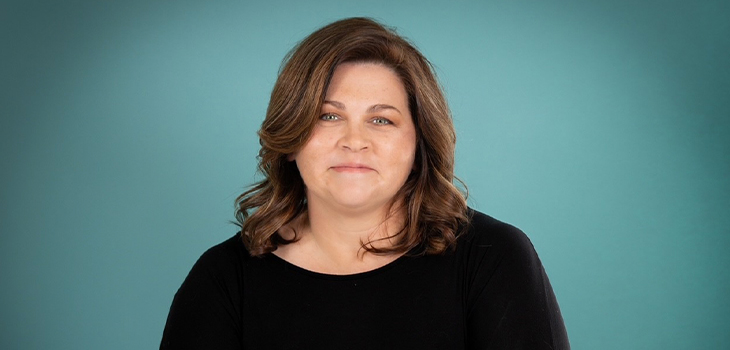
As DonateLife Victoria’s Family Communication Nursing Coordinator, Jessica helps patients and families navigate the process of organ donation after VAD. A key part of her role also involves raising awareness among health professionals and the broader community that donating organs after VAD is an option for some people.
The first known case of organ donation after VAD occurred in Australia in 2023 and cases remain rare – but Jessica is working to ensure it doesn’t stay that way.
“In Victoria, there’s been a total of 10 actual donors, and we’ve had another three that were set for donation, but it didn’t proceed for varying reasons,” she says.
“As awareness spreads, and the acceptance of donation in this space grows, we expect the numbers will go up. We believe we may be able to increase the donor pool here in Victoria by at least 10% from people who are suitable for donation and have a VAD permit. That is significant in that there’s a number of lives that will be saved.”
Organ donation after VAD
In the lead-up to the introduction of VAD in Victoria in 2019, Jessica chaired a DonateLife Victoria working group that examined the potential for organ donation following VAD – something already in place in countries like Canada.
“It was a step into the unknown here in Australia,” she recalls.
“But we kept coming back to the purpose of saving lives – knowing that donation could offer some comfort to someone facing the end of their life, while also helping someone else to keep living.”
Referrals typically come from VAD nurses and navigators, physicians, or directly from patients and families.
It often starts with a simple question over the phone: “Could this be a possibility for me?”
From there, Jessica provides tailored information about what donation might involve, often meeting people in their homes alongside their loved ones.
“We explain what donation would mean, what it would look like, and answer any questions they have.”
Not everyone who accesses VAD is eligible to donate organs, Jessica explains.
The majority of people who access VAD have cancer and are therefore unsuitable. However, people with neurodegenerative such as MND, may be suitable donors. Organ donation can include the heart, lungs, liver, pancreas, kidneys, and tissue.
Challenging misconceptions
One of the biggest challenges in her role, Jessica says, is overcoming misconceptions – not just in the wider community but within healthcare itself – about the possibility of donation following VAD.
“One of the hardest things is working with medical and nursing professionals who feel donation shouldn’t be discussed with patients, when in fact it’s their choice to make.
“It comes from a good place – people want to protect others. They worry that talking about donation might harm patients, when in reality, we know it can have the opposite effect.”
Patients who consent to donating their organs following VAD must die in hospital for their organs to be transplanted as soon as possible.
A privilege and a purpose
Having worked with DonateLife Victoria for more than a decade, Jessica says her new role builds on what first drew her to organ donation nursing: supporting families during incredibly difficult times while helping to provide some comfort.
“It can be quite confronting at times, talking to people about their mortality,” she admits.
“But for me, while it can feel uncomfortable, it’s a real privilege to sit with people, provide information, and give them the opportunity to consider their options.
“If organ donation is something you want to learn more about, please contact DonateLife Victoria. We’re here to provide factual information about what it might look like, tailored to your individual health circumstances.
“It’s a decision that can change lives – and save lives.”
DonateLife Week 2026 runs from 26 July to 2 August – dontatelife.gov.au