

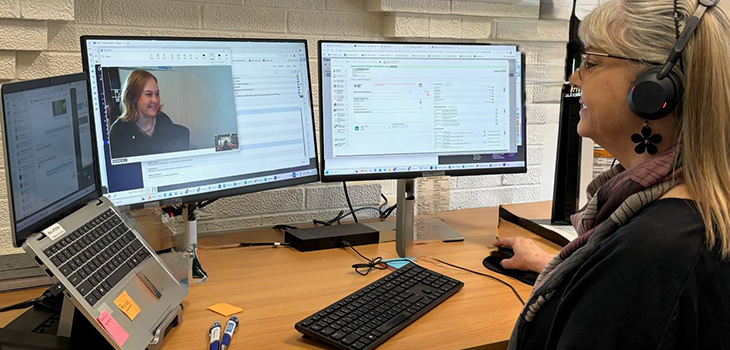

At Grampians Health in rural Victoria, a nurse-led telehealth service is cutting repeat ED presentations among patients with complex and chronic conditions by around 30%, with research demonstrating a 33% reduction in re-presentations.
As manager of Hospital Without Walls, registered nurse William Ho oversees a suite of programs designed to deliver care beyond the traditional hospital setting. Among them is Grampians Watch, a nurse-led telehealth service helping people with various health conditions stay safely at home and avoid unnecessary and time-consuming trips to hospital.
Grampians Watch focuses on patients identified by the ED as low-risk for deterioration but in need of ongoing guidance to manage their health needs and goals. These are often people living with conditions such as heart failure, chronic obstructive pulmonary disease (COPD) and diabetes.
A team of nurses provides tailored, ongoing support, via telephone. This includes a clinical nurse (Health Coach) who provides expert advice about various medical conditions and the care and ongoing services, such as counselling or physiotherapy, patients often need. The calls can help spot health declines quickly and avoid hospital visits if the issues can be resolved at home through self-management, a GP or after-hours service provider.
For example, a patient experiencing shortness of breath might be guided through appropriate medication use or symptom monitoring over the phone to prevent an unnecessary hospital visit.
Some patients remain in the program for up to six months, receiving continuous support until they are suitable enough to be discharged.
An ANMF (Vic Branch) member, William says the nurse-led model of care empowers nurses to work autonomously.
“Nurses are the backbone of the healthcare service,” he explains.
“This is a nurse-led service, medical referral only occurs when the patient become really unwell. Nurses work to their full scope of practice, empowering them to use their critical thinking, experience and clinical decision-making to manage cases.”
A health service leader who is passionate about developing innovative and sustainable models of care, including expanding home-based services through digital health, William says providing care via tools such as telehealth represent both a challenge and an opportunity.
Nurses who lead Grampians Watch typically require more than five years’ experience in the acute sector. Providing care over the phone requires good communication skills and the ability to assess and care for patients without the visual cues afforded at the bedside.
According to William, the health literacy of patients remains a key challenge, with many patients lacking understanding of their conditions or when hospital care is necessary.
In a region that spans about 44,000 square kilometres, limited resources and staff compared to metro hospitals presents another challenge.
For William, who manages other programs including home-based cancer care, and post-acute care, the success of Grampians Watch is part of a much larger transformation within digital health and the future of healthcare delivery.
Plans are also underway to expand Grampians Health’s virtual capabilities and digital tools in supporting clinical care.
“Digital health is something we will use more rather than less in the future,” he says.




One Response
Thank you to the Australian Nursing & Midwifery Journal (ANMJ) for the opportunity to contribute to this interview and for recognising the value of nurse-led innovation in Grampians Watch, Grampians Health.