

The Australian Nursing and Midwifery Federation (ANMF) has urged federal MPs to strengthen the National Employment Standards (NES), arguing that current provisions fail to meet the needs of a highly feminised workforce and fall short of the Fair Work Act’s objectives of job security and gender equality.
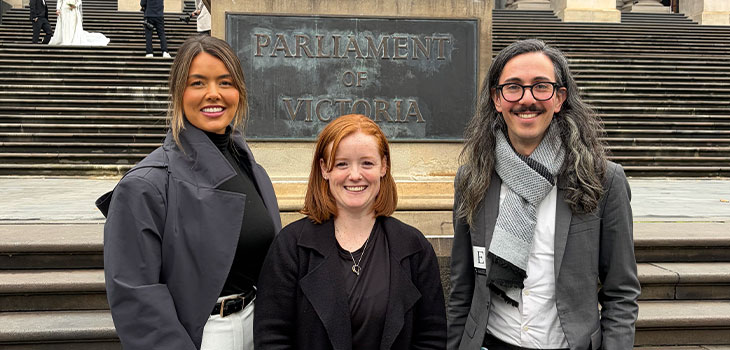
ANMF representatives yesterday appeared before the House of Representatives Standing Committee on Employment, Workplace Relations, Skills and Training’s Inquiry into the Operation and Adequacy of the National Employment Standards, held in Melbourne this week.
The union has made four key recommendations aimed at modernising parental leave, improving safety protections for pregnant workers, and expanding access to personal and carer’s leave.
The NES must better reflect the realities of nursing and midwifery, professions dominated by women and shaped by gender‑based occupational segregation, ANMF Assistant to the Federal Secretary Alana Ginnivan told the Parliamentary Inquiry.
“Nurses and midwives not only care for women and parents who need time away from work to care for their newborns and children, but they may also need that same access to leave during their own careers.”
Ending the 12‑month requirement for parental leave
The ANMF has called for the removal of the legislative requirement to have completed 12 months’ service before being able to access unpaid parental leave.
“As it currently stands, a new employee could fall pregnant two months into their employment, give birth at the 11-month mark, but fall one month short of being able to take unpaid parental leave,” said Ms Ginnivan.
In such cases, employees are faced with a very real professional and financial dilemma and may be forced to resign to care for their newborns with no job security or financial stability—an outcome the ANMF argues is incompatible with the Fair Work Act’s 2022 amendments promoting job security.
The union is calling for parental leave to be available from the commencement of employment, ensuring no worker is left without protection during pregnancy or early parenthood.
Paid parental leave a workplace right
The ANMF has also called for the introduction of paid parental leave into the NES, complementing the Commonwealth Paid Parental Leave Scheme, which will increase from 120 to 130 days in July 2026.
The union proposes a model where the government scheme continues to provide minimum‑wage payments and employers top up the remainder to the worker’s full ordinary rate of pay.
“While many employers now offer paid parental leave to supplement the Commonwealth Scheme, this is not a universal standard across the country. There are pockets of the Australian workforce where there is no paid entitlement available.”
“The practical impact of this that working parents receive a drop in pay when they have time off to raise newborns . These are workers who still have rent or mortgages to pay, bills to pay, groceries to buy, and children to support and provide for, said Ms Ginnivan.
Protections for pregnant workers
Current NES protections for pregnant workers are inadequate and can leave nurses, midwives and carers financially worse off, the ANMF highlighted at the hearing.
Paid no safe job leave
— which applies when a pregnant worker cannot be safely redeployed — is only paid at the base rate of pay, meaning shift penalties and loadings are lost. For shift‑based professions like nursing, where penalties and loadings form a substantial portion of income, this can amount to a significant pay cut at a time when workers are preparing for unpaid parental leave.
The current structure can unintentionally incentivise pregnant workers to remain in unsafe environments to avoid financial hardship. Federal ANMF is calling for all paid NES entitlements — including paid no safe job leave — to be paid at the full ordinary rate of pay.
The union also recommends abolishing unpaid no safe job leave, which applies only to employees with less than 12 months’ service. If the 12‑month rule is removed, this category becomes unnecessary; if it remains, the ANMF argues the entitlement should still be paid, regardless of service length.
Expanding personal and carer’s leave for preventative healthcare
The ANMF also urged the Committee to modernise personal/carer’s leave, which currently requires workers to be “unfit for work” to access paid leave. The narrow definition prevents employees from using paid leave to attend medical appointments unless they are already incapacitated, discouraging preventative healthcare and disproportionately affecting workers with chronic conditions or caring responsibilities.
The ANMF proposes either expanding the definition of personal/carer’s leave and increasing the total entitlement, or creating a new, separate paid leave category for medical appointments.
Throughout the hearing, the ANMF emphasised that the NES must evolve to reflect the realities of a modern, gendered workforce—one where pregnancy, caring responsibilities and workplace safety intersect.
The Inquiry continues.