
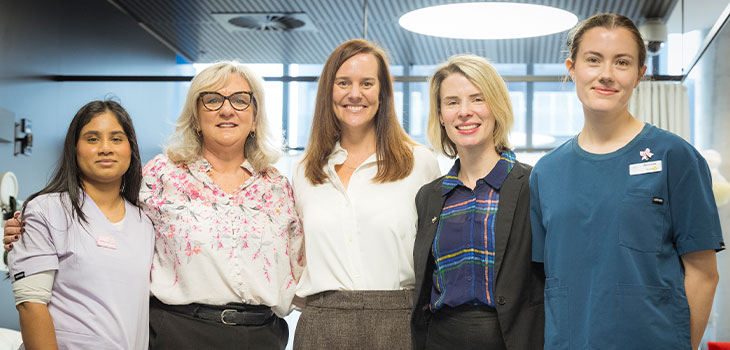

An experienced clinician with a background spanning hospital services and Safer Care Victoria, the state’s peak healthcare quality and safety improvement agency, has been appointed Victoria’s first Chief Midwife.
Elisa McDonald, who has previously worked as Senior Maternity Adviser, Safer Care Victoria, and as a midwife at Western Health, is regarded as a true advocate for the midwifery profession, for women and birthing people and for equitable access to maternity, sexual and reproductive health care.
The ANMF (Vic Branch), which represents nearly 8,000 Victorian midwives and has long advocated for the position, welcomed today’s appointment, calling it a win for the profession that ensures midwives will be represented at the highest levels by a clinical leader who understands the maternity system and unique challenges faced by midwives.
The appointment of a Chief Midwife was a key recommendation of the Maternity Taskforce Report, released in 2025 by the Victorian Maternity Taskforce, which was formed in 2024 to strengthen maternity care by addressing workforce challenges and improving service delivery, with a focus on regional Victoria.
“We look forward to working with the Chief Midwife to drive reform and strengthen maternity care for our members, who want to work in a system that provides access, choice and flexibility to them and the families in their care,” said ANMF (Vic Branch) Assistant Secretary and former ANMF maternity services officer Nicole Allan.
The ANMF (Vic Branch) also welcomed the state government’s decision to extend the neonatal postnatal nurse support pilot underway at University Hospital Geelong, Werribee Mercy Hospital and Western Health Joan Kirner Women’s and Children’s Hospital Sunshine, since late 2024. The new role will be introduced at Royal Women’s Hospital, Monash Medical Centre (Clayton) and Mercy Hospital for Women (Heidelberg).
ANMF called for the new role in postnatal wards to help keep more newborns with additional needs and their mothers together instead of sending unwell neonates to the special care nursery. The new role was also designed to increase the number of midwives in Victoria by providing registered nurses who had limited exposure to maternity settings the opportunity to work on a postnatal ward before committing to postgraduate midwifery studies.
“Midwives who were cautious at first are now saying they don’t know how they managed without these nurses and we’re also seeing experienced nurses decide to take on the post-graduate employment model, which is a faster way to increase the midwifery workforce,” said Ms Allan.
By 1 July, these six hospitals will also see the full implementation of increased nightshift postnatal ratios from 1:6 to 1:4, plus a neonatal postnatal support nurse on every shift.
“This means midwives and nurses will be working together to provide care and to keep more mums and babies together and that means better health outcomes and a better start to life,” Ms Allan said.