
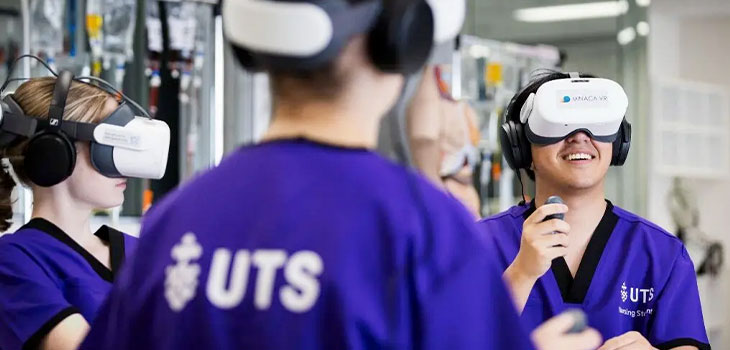

In an Australian first, the University of Technology Sydney will make immersive virtual reality training in aggression and violence prevention mandatory as part of preparation for clinical placements.
From 2027, all first‑year nursing students at UTS will undertake mandatory VR training in violence-prevention before they go on placement.
The decision comes amid growing concern about the frequency of violence in healthcare settings. A recent report from the NSW Nurses and Midwives’ Association (NSWNMA, ANMF NSW Branch) found that 88% of nurses, midwives and carers have witnessed aggression or violence at work.
For nursing students on clinical placements, incidents are reported almost weekly, Lucy Rosenberg, Clinical Academic Lead in the UTS School of Nursing & Midwifery told the ABC. “It could be verbal aggression, it could be physical abuse, it could be just threats. Students need strategies before they’re exposed to these situations in real life.”
Developed with Australian VR company Start Beyond, the program places students inside realistic healthcare scenarios using VR headsets. They must recognise escalating behaviours, make decisions under pressure and practise de‑escalation techniques — all within a safe, controlled environment.
The scenarios draw on evidence‑based behavioural profiles and proven de‑escalation strategies. Start Beyond’s platform allows students to:
- Practise de‑escalation using repeatable, high‑pressure simulations
- Build confidence in responding to difficult patient behaviour
- Develop practical skills that support safer outcomes for both staff and patients
A recent UTS pilot found 90% of participants reporting the VR simulation helped them identify early warning signs and take appropriate action to stay safe.
“We’ve seen enough violence against nurses to know we must give students practical strategies to recognise escalating situations and keep themselves safe before they encounter such threats in the real world,” said Professor Jacqui Pich, UTS Deputy Head of School (Teaching and Learning).
Traditional teaching methods, including classroom role‑play, were unable to replicate the realism or emotional intensity of VR. “Students aren’t responding to a colleague pretending to be a patient. They feel like they’re actually in the situation. We all have a duty of care to prepare students as best we can for the environments they’ll be working in.”
Watch the ABC video here