

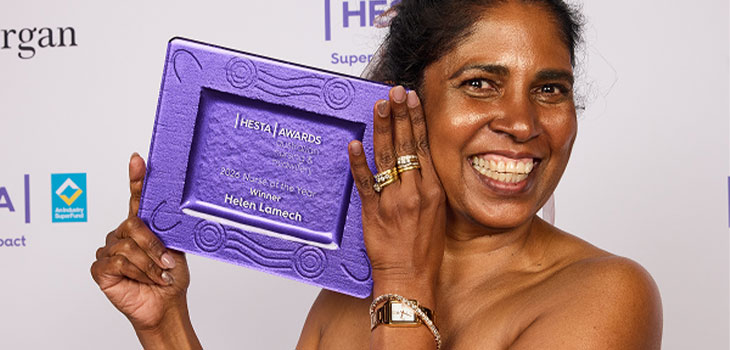

Northern Territory diabetes educator Helen Lamech has been named Australia’s Nurse of the Year, recognised for transforming diabetes care across Central Australia through a community‑led model that now supports more than 100 families.
With more than 30 years of nursing experience in the NT — including the past decade as a diabetes educator — Ms Lamech has directly improved the lives of more than 2,000 people facing significant social, geographical, and cultural barriers.
The winners of the HESTA Nursing & Midwifery Awards 2026, now in its 20th year were crowned in a gala dinner in Melbourne on Thursday night. The nomination for HESTA Nurse of the Year came as a surprise to Ms Lamech. “I only found out after I was shortlisted about two and a half weeks ago. A group of colleagues got together and nominated me.”
A personal journey ignited a career
Ms Lamech’s parents immigrated from India before she was born, and she grew up in Canberra. Her commitment to empowerment began in her teens, when her mother was dying of cancer. She remembers being excluded from her mother’s care because she was 17.
“I didn’t know what was going on. I didn’t know how really sick she was. We’d planned to go to India at the end of the year to see her mum that she hadn’t seen since she was 18. Then she passed away, and it took me a long time to get over it.”
“Looking back now, I think what I wanted was empowerment, but I didn’t know that’s what it was. I thought, I want to be a different nurse — I want to include everyone — and that got me started in nursing.”
“You have to give people information so they can make their own choice. Mum didn’t know how sick she was. Dad didn’t know. It was just a horrible journey.”
After training in Adelaide and completing a graduate program in Darwin, Ms Lamech worked across multiple wards before discovering her passion for public health, community development, and eventually diabetes education.
“I had an opportunity to fill in at Darwin Hospital as a diabetes educator and I loved it. I thought, ‘This is what I want to do.’ If I can be part of the solution — reduce dialysis, reduce amputations, reduce complications — then that’s where I want to be.” She went on to complete a master’s degree in diabetes.
Building a system, not a one‑person service
When Ms Lamech arrived at Alice Springs Hospital, she found no structured diabetes service. As the only diabetes educator for two and a half years, she built processes so care wouldn’t depend on a single clinician.
She upskilled in diabetes technology as Central Australia had no one certified to manage insulin pumps for type 1 diabetes. Even today, she remains the only clinician in the region certified across all four pump systems. In the past four years alone, she has initiated more than 100 people on insulin pumps. “I teach GPs, endocrinologists who aren’t familiar with pumps, nurses, exercise physiologists, pharmacists,” she said. “The more people who understand the technology, the better it is for the patient.”
She also established the region’s first nurse‑led type 1 diabetes clinic, mentored more than 30 diabetes educators, and upskilled over 300 health professionals — improving safety, reducing hospital admissions, and strengthening long‑term outcomes.
Working with Healthy Living NT, she developed a peer‑mentored community network of more than 100 families, introducing diabetes technology and education to people who face significant barriers to accessing care.
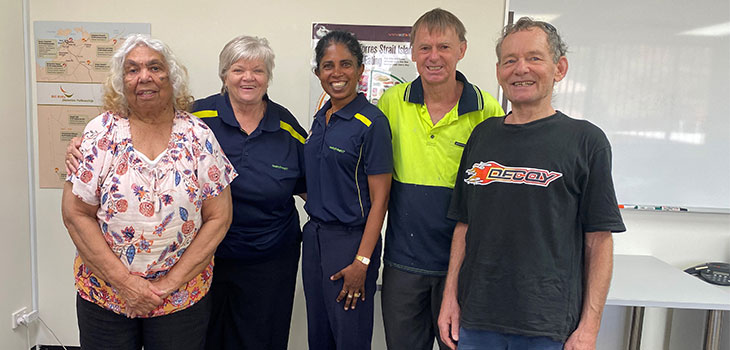
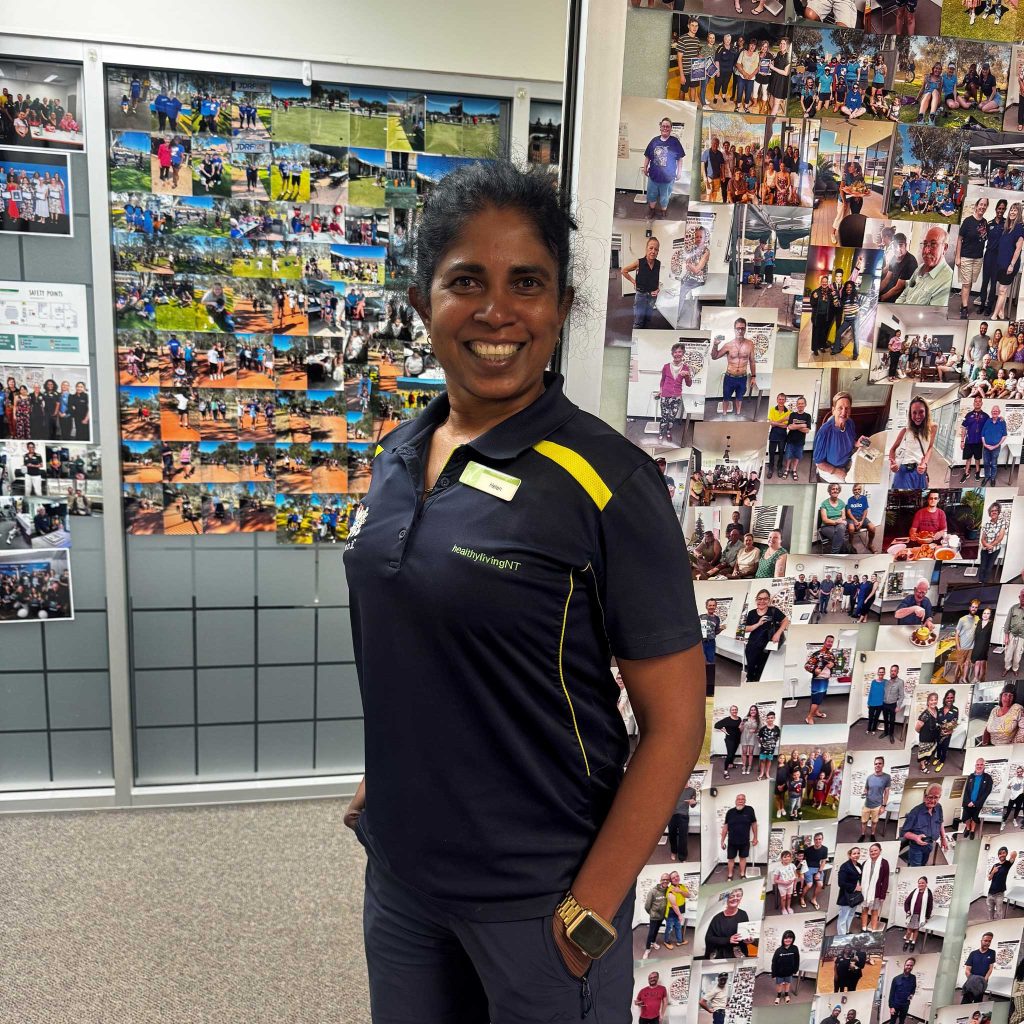
The model focuses on connection, shared learning, and practical support. The group began in the back room of her first pump patient’s home and now meets at the local golf club, with up to 70 people attending. Her clinic office walls are covered with photos of the families she supports.
“I don’t give out phone numbers, but if people click, they exchange numbers and form little groups that help each other,” she said. “It takes a load off — I put them on the pump, but they have to learn how to live with it together. Two of the women now even cook together.”
Technology can be challenging, especially for older patients. “Ringing tech support, you could get a random person reading a script, and people get frustrated,” she said. “Now, because of the mentorship in the group, experienced people help the less experienced. They still come to me for clinical advice, but most issues are technical — like ‘my sensor’s not connecting.’ If they can’t call me, they call someone else.”
Her work extends beyond type 1 diabetes. Some type 2 patients — including post‑transplant patients — also require pump therapy, but they face out‑of‑pocket costs because pump consumables aren’t subsidised for type 2 diabetes.
This is one reason she is completing her nurse practitioner studies. “There’s no bulk‑billing GPs here,” she said. “Some GPs charge $30 for an electronic script. If I can write a script for free, that takes some pressure off.”
A vision for sustainable, culturally safe care
Ms Lamech encourages all nurses to upskill in diabetes technology. “They don’t need to know how to put a pump on or understand the algorithm. But they do need to know how to troubleshoot — is the line kinked? Is it pairing with the CGM? Putting someone on a pump is a specialty, but general nurses still need the basics.”
Every three months, she teaches three‑ to four‑hour sessions to graduate nurses at the university. She also trains GPs and remote health workers to make sustainable decisions. “You have to look at the whole picture… what’s the best outcome for the patient?
“I will never tell someone what to do. It’s always, ‘What do you think?’ Telling someone to take four units with every meal isn’t empowering. And clinically, insulin might be best — but is it realistic? Do they have a fridge? Can they monitor glucose? Technology isn’t for everyone.”
She uses analogies to help people understand their condition, especially in remote communities. For type 2 diabetes, she explains insulin as a key that opens a gate to let glucose in. “Sometimes the key is rusty,” she said. “You’ve got to clean the gate. People understand that.”
Locals affectionately call her the “Sugar Nurse.” When she’s out shopping, people show her their trolleys. “They’ve worked it out themselves — that bread will raise glucose — instead of me giving them a chart saying what not to eat,” she said. “I let them decide from the choices they have.”
Ms Lamech sees new patients daily and runs group sessions to manage rising demand. She also joins community activities — including Zumba — to encourage lifestyle changes through participation rather than instruction.
Despite the workload, she remains focused on building a sustainable workforce. “I’m mentoring people… I’m always saying, ‘Come to Alice.’”




6 Responses
So proud of my mum!! Such an amazing moment of seeing her get recognised for all her hard work days on end!
Incredibly proud of Helen Lamech. Her natural no nonsense approach has helped me turn my Type 2 Diabetes into a much more controlled situation. Ever indebted to you Helen and all you do for the people in Alice Springs and beyond
Very inspiring.
So proud to be a nurse & the ability it has to change lives.
Starting small, working big for tbe greater good.
Congratulations Helen.
A great example of a small pebble with great ripples
Congratulations Helen
You are fabulous!
It was a good read and you. Have helped a lot of people with your nursing skills well done .sugar mum
What an amazing achievement and an outstanding role model for every nurse out there to achieve greatness, starting at the beginning and working up! Well deserved.