

NSW nurses and midwives will receive ‘record-breaking’ pay rises after the Industrial Relations Commission (IRC) found their work has been historically undervalued, particularly due to gender-based inequity.
But the New South Wales Nurses and Midwives’ Association (NSWNMA), who pursued the case, says the increase for registered nurses and midwives isn’t enough to ease cost-of-living pressures or stop nurses moving interstate for better-paid roles.
Handing down its decision this morning after months of deliberations, the IRC determined that nurses, midwives and assistants in nursing (AINs) deserved a “one-off reset in rates of pay”.
The decision outlines the following increases staged over three years:
- 16% for registered nurses and midwives (10% backdated to July 1, 2025, and 3% per year for the next two years)
- 18% for enrolled nurses (12% backdated, then 3% per year for 2026 and 2027)
- 28% for AINs (22% backdated, and 3% for the next two years)
The IRC stressed the increases do not include the interim 3% already accepted last year.
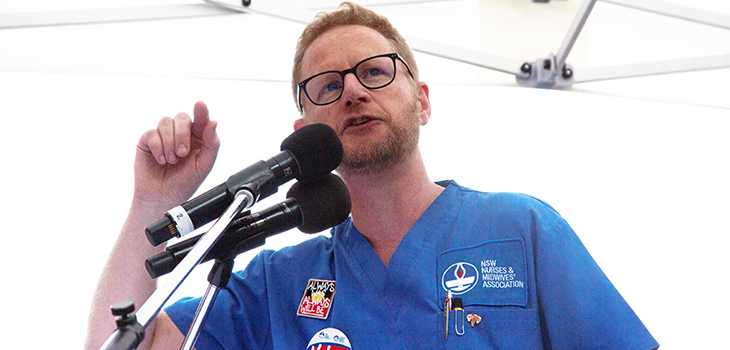
Speaking outside the IRC following the decision, NSWNMA General Secretary Michael Whaites expressed mixed emotions about the “record-breaking pay deal” for the state’s nurses and midwives, welcoming significant gains for ENs and AINs but warning it does not go far enough for registered nurses and midwives.
“Today’s announcement gives an historic, record-breaking pay deal for nurses and midwives in NSW,” he said.
“And yet, for registered nurses, it is not enough the fix the structural reform that we need in this state. Registered nurses and midwives remain behind those in other states [on pay]. They are the backbone of this workforce. They are the majority of this workforce, and we hoped for a better outcome for them.”
Mr Whaites said while the initial 10% of the pay deal for nurses and midwives was welcome, it would have little impact amid widespread cost-of-living pressures nor stem the flow of nurses leaving NSW for better pay interstate.
“The pay increase [for RNs/RMs] will be welcome, but the pay increase will be swallowed up by fuel, rising rents, rising mortgages, paying for parking when they get to work. These are the things they are facing every day and that we still need to address,” he said.
“A 10% pay increase is great. This is much more than the 9% pay increase that the government was offering. So, we are justified in having run this fight and having run this court case. Does it shift enough so that those first-year registered nurses are no longer looking to Queensland, no longer looking to Victoria for that higher wage? We’ll have to go back and do that assessment. Our concern is that it won’t be enough to help them stay.”
NSW midwife Christie praised the IRC for acknowledging historical gender undervaluation faced by the professions but said the pay rise simply just “doesn’t go far enough”.
“As a mother, raising two girls here in Sydney, it’s tough, and we need to see more action from this government.
“The staffing at our hospitals here, it’s just getting worse and worse each year. I’ve been at this for seven years, and honestly, it’s the lowest it’s been. We’re just looking for more from this government and we won’t stop asking for it. We deserve it.”
Holding back tears, NSWNMA Councillor Wing Besilos said she felt disappointed by the decision.
“At the beginning, I was actually quite touched that they acknowledged the gender gap and the undervaluing of nurses and midwives,” she explained.
“But then the result came up. So, we asked for 35% and we basically got just 7% of that. The COVID crisis and now the war-induced cost of living crisis has done a lot of damage to us financially, especially those with mortgages. I work at Westmead Hospital and to the West, our members drive from Penrith to Westmead or the Blue Mountains, and the petrol amount that they have to pay to get to work is so much. The 7% would probably help, but it’s still a very disappointing outcome.”