
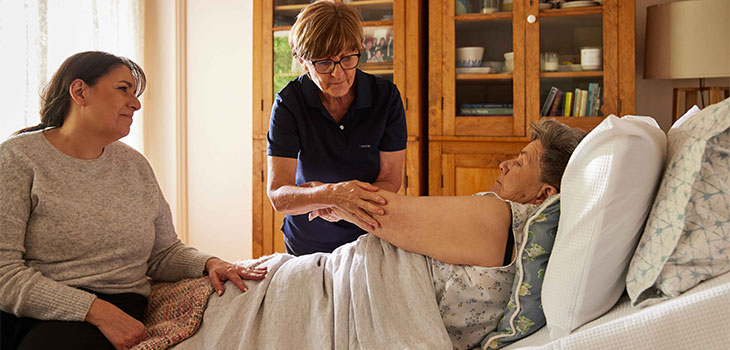

People with complex health conditions are fulfilling their preference to die at home when they have access to specialist community palliative care, challenging assumptions that hospital care is inevitable.
Released for National Palliative Care Week (10–16 May), the new research questions Australia’s hospital‑first approach for people with the most complex palliative care needs.
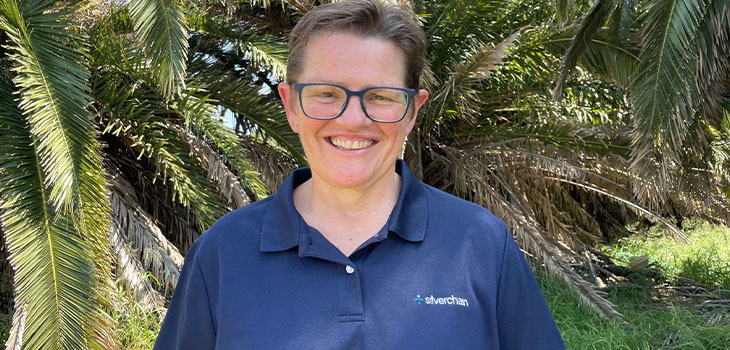
“When hospital is seen as the automatic option, we risk losing the normality of death,” said Silverchain Clinical Nurse Manager Clare Warren.
“At home, people are surrounded by what’s familiar — family, pets, gardens, the everyday sounds of life. Even when someone is very unwell, that familiarity can be incredibly comforting and meaningful in their final days.”
While around 70% of Australians say they would prefer to spend their final days at home, a six-year study of 4,100 patients conducted by Silverchain and published in BMJ Public Health found medical complexity is often wrongly used as a reason for hospital admission.
Challenging the hospital‑first mindset
Palliative care‑related hospitalisations in Australia increased by 29% between 2015 and 2022 — three times higher than all other hospital admissions — with demand for palliative care services expected to double by 2050.
The research found patients with non‑cancer illnesses — such as heart or lung disease — often have more complicated medical needs and higher frailty than cancer patients. Yet, when supported by specialist community palliative care teams, they are more likely to achieve their preference to die at home.
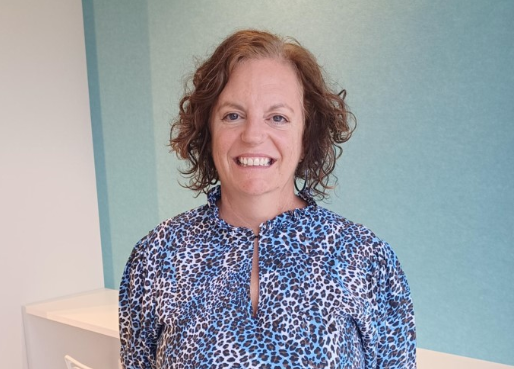
The findings challenge long‑held beliefs that specialist palliative care is best suited for people with predictable declines, said lead author and Silverchain’s National Director of Research & Evidence, Adjunct Professor Karen Smith (pictured left).
“Non‑cancer patients often enter palliative care with multiple health conditions, greater frailty and complex care needs, yet this study shows they can still die in their preferred place with the right community support.”
Medical complexity does not require a hospital bed
A complex health diagnosis should not be a barrier to choosing to die at home, said Adjunct Professor Smith. “We are proving that medical complexity does not require a hospital bed. By bringing specialist expertise in the home, we aren’t just managing symptoms — we are safeguarding a person’s fundamental right to choose how and where they spend their final moments.”
Traditional palliative care triage tools were largely designed around cancer trajectories, leaving many non‑cancer patients under‑recognised and referred too late, she said.
“The increased complexity of non‑cancer conditions means we need better systems to identify palliative care needs earlier and ensure equal access to specialist community services. It’s time our health system prioritised this choice for all Australians, regardless of diagnosis.”
The findings add to growing calls for a nationally coordinated approach to specialist community palliative care, as the number of Australians aged 85 and over who may require palliative care is projected to double by 2042.
The role of specialist nurses in home‑based care
Highly skilled palliative care nurses make home‑based care possible for people with very complex needs, said Ms Warren.
“We are invited into people’s lives at an incredibly vulnerable time,” she said. “Our role is to build trust with patients and families, manage distressing symptoms and give carers the skills and confidence to support someone at home — often for the first time. We don’t just care for the patient; we support the whole family through what can be an overwhelming experience.
“We help families understand what’s happening, stay calm during moments of crisis and respond as symptoms change, often around the clock. With the right nursing support, many families realise they can do far more than they ever thought possible — and most don’t regret that choice.”
National Palliative Care Week runs from 10-16 May, focusing on raising awareness and encouraging conversations about palliative care and end-of-life planning. The 2026 theme is Getting to the heart of it: Big Questions. Real Answers