

Nurses, midwives and carers are being priced out of the communities they work in, with rising rents, unaffordable homes and cost-of-living pressures taking a growing toll on the workforce. Robert Fedele reports.
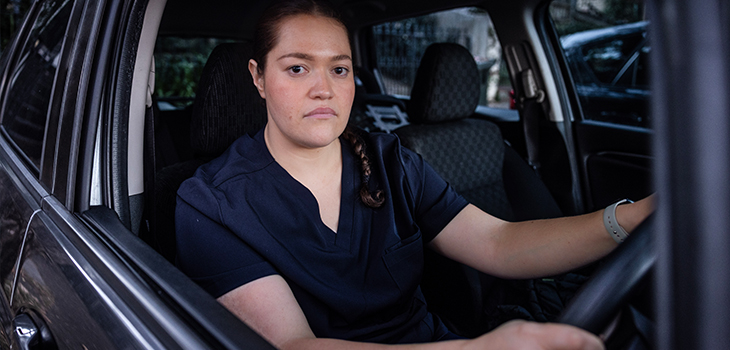
After finishing a shift at Royal Prince Alfred (RPA) Hospital, enrolled nurse Talei Williams faces a dreaded commute stretching well over an hour.
By the time she gets home to Waterfall, Sydney’s southernmost suburb, the 30-year-old nurse and student feels exhausted – not just from the demands of caring for others, but from the cumulative toll of simply getting to and from work.
Like many nurses and midwives, Talei cannot afford to live near where she works, squeezed by soaring housing prices and rents, rising living costs, and wages that have failed to keep pace. The suburbs surrounding RPA, such as Camperdown, Newtown, Balmain, and Annandale, are far beyond her reach, with median house prices well beyond $1 million.
“I’m basically living pay cheque to pay cheque,” says Talei.
“Essentially, at the moment, it’s almost impossible [to afford a house]. My wage wouldn’t even come close to covering paying off a mortgage on any of the houses in, and around, where I work.
“The rental market is just as bad. I have looked a few times, when I get sick of my ridiculously long commute to and from work, and even a run-down one-bedroom studio apartment is like $700 a week. That would chew up about 80-90% of my fortnightly income.”
Instead, Talei lives at home with her parents – a decision not shaped by choice, but by financial necessity. She had previously tried to balance rent and work, and study, but it pushed her into what she describes as “a terrible financial and mental health situation”, forcing her to move back home.
Now in her third year of a Bachelor of Nursing degree at the University of Technology Sydney (UTS), Talei splits her time between study and shifts at RPA – a demanding routine that leaves little time for anything else.
Her commute typically takes more than two hours each day.
The cost of caring
“I’m pretty lucky in that I don’t do night shift, but there have been a few times where I’ve had to in order to pick up as many extra hours as I can,” says Talei.
“Driving that distance home after being awake all night is challenging. You always see the advertisements everywhere that say driving tired is dangerous and yet healthcare staff are driving tired because we’re overworked, working long hours, and then expected to drive home.
“There is the option of public transport, but it can be very unreliable and unsafe. There were times where I was catching the train and then all of a sudden, the trains had a massive breakdown and I was stuck in the city for three hours and didn’t get home until nine o’clock that night when I’d finished at 4.30 in the afternoon. All those little things kind of chip away slowly at your ability to function day to day.”
Talei’s experience is far from unique, with many of her colleagues around the same age turning to multi-generational living arrangements or crowded share houses to stay afloat against a backdrop of rising cost-of-living pressures including fuel, parking and groceries.
Talei is supportive of stronger reforms to tackle Australia’s housing affordability crisis so that essential workers like nurses and midwives can afford to live near their job.
“At the end of the day, it’s in the best interests of the health of the general public,” she says.
“If you have staff who are travelling over an hour every day into work and then working eight, 10, 12 hours of physical labour, you would have to wonder whether or not that nurse that is looking after the patient is actually being looked after themselves.”
“They always talk about the fact there’s such a shortage of healthcare staff in a lot of the major city hospitals and it’s likely because no one can afford to live nearby.”
While Talei supports housing reforms, she says meaningful wage growth would make the biggest difference in her ability to one day enter the housing market.
Essential workers locked out
Anglicare’s Rental Affordability Snapshot – Essential Workers Report 2025 underscored the harsh reality of the country’s housing crisis and cost-of-living pressures on essential workers such as nurses, teachers, ambulance officers, and childcare workers.
The study examined more than 51,000 rental listings across Australia, assessing affordability across 16 frontline occupations by analysing how many properties workers on full-time award wages could afford in regions across the country.
The report found nurses could afford just 1.5% of available rental properties, while 1.7% were affordable for aged care workers, despite the sector recently securing historic pay rises.
“Communities rely on nurses, teachers, cleaners and hospitality staff, yet these workers cannot afford to live in the communities where they are needed,” the report said.
“Many of these are highly skilled professions that require years of training, qualifications and ongoing professional development. The fact that people in these roles cannot afford housing shows just how deep the crisis has become.”
The report argued that simply increasing housing supply is not a “silver bullet”, calling for broader reform including phasing out the Capital Gains Tax discount, building at least 25,000 new public and community homes annually over the next two decades, stronger renter protections, and wage growth that keeps pace with housing costs.
“When essential workers cannot afford to live near the people they serve, schools, hospitals, aged care homes, and emergency services struggle to recruit and retain staff,” the report said.
“When renters are forced to spend more than half their income on housing, they cut back on food, healthcare and other essentials.”
Unions lobby for housing reform
Earlier this year, the Australian Nursing and Midwifery Federation (ANMF), alongside the Australian Council of Trade Unions (ACTU), made submissions to a Senate Inquiry into the operation of the capital gains tax discount.
Unions called for the scaling back of the CGT discount from 50 to 25%, arguing the current system advantages investors over younger workers trying to buy their first home.
Reforming the CGT discount, together with imposing limiting negative gearing tax breaks, was put forward as part of a broader response to the national housing crisis.
“Too many workers can no longer afford to live near where they work, leaving them stuck with long and costly commutes and less time to spend with their families,” ACTU President, Michele O’Neil said.
“Under our proposal to scale back the CGT discount, a first-time home buyer would be more likely to win out against professional landlords and be able to get into home ownership.”
In its submission to the Inquiry, the ANMF said meaningful reform was “urgently needed”, warning nurses, midwives and care workers were increasingly being locked out of affordable housing and pushed further away from the communities they serve.
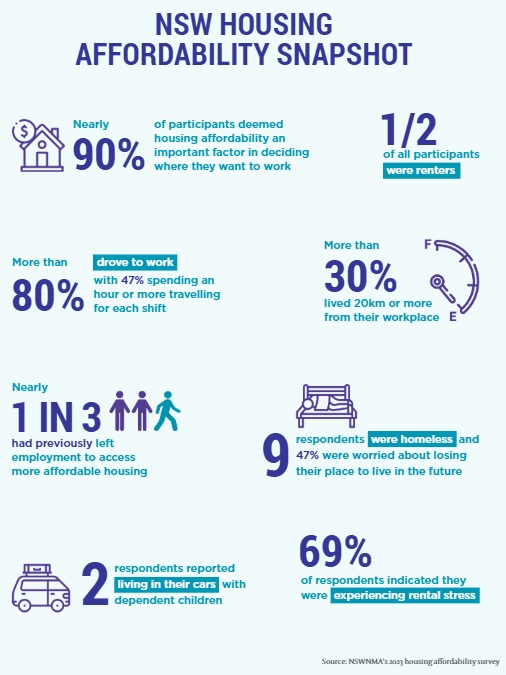
Recent survey findings from the New South Wales Nurses and Midwives’ Association (NSWNMA) reinforced the scale of the problem. More than 3,000 participants surveyed said housing affordability pressures were intensifying over time and, while most more acute in metropolitan areas, remained a widespread issue across the state.
“We cannot save for a deposit to buy our own home, so we’re trapped into renting,” one respondent said.
“I currently pay 40% of my take home pay on rent. This makes it very difficult to save money and means if we have a week where a lot of bills come at once, or something bad happens such as the car breaks down, we have to go without groceries that week,” said another.
Tax reforms aim to shift the market
In landmark changes announced in the May Federal Budget 2026–27, the Australian Government will replace the 50% Capital Gains Tax (CGT) discount with a new inflation-linked system and introduce a 30% minimum tax rate on capital gains from 1 July 2027.
The reforms will apply only to gains accrued after 1 July 2027. Investors purchasing new builds will be able to choose between the existing 50% CGT discount and the new model.
The government will also restrict negative gearing to newly built properties from 1 July 2027, in a move designed to direct tax incentives toward increasing housing supply.
Existing investment properties purchased before Budget night will be grandfathered, meaning current negative gearing arrangements will continue to apply for as long as those properties are owned.
The government estimates the reforms will support an additional 75,000 homeowners over the next decade. It also announced a new $2 billion Local Infrastructure Fund to help local governments and state utilities build essential infrastructure to support new housing.
The ANMF welcomed the reforms, saying the measures would help level the playing field for the next generation of nurses, midwives and carers struggling to find secure and affordable housing.
Earlier this year, the ANMF also wrote to Prime Minister Anthony Albanese, calling for the establishment of a Commonwealth-funded housing program for key workers, including capital grants for accommodation and rental subsidies in regional, rural, remote and metropolitan areas where housing is scarce.
“A growing number of ANMF members, particularly younger nurses, midwives and carers starting their career, have been locked out of affordable housing,” ANMF Federal Secretary Annie Butler explained following the Budget.

“They’re being forced to commute long distances to get to and from work because they can’t afford to live in the communities they serve. Accelerating rents and a lack of affordable housing supply across the country are making it almost impossible for them to save for a deposit.
“What’s concerning is that this financial pressure is contributing to stress, burn-out and attrition across the health and aged care workforce.”
Home ownership out of reach – for now
Early career registered nurse Jacinta McGaffin, who works at the Royal Darwin Hospital’s Alan Walker Cancer Care Centre, became a first-time renter in October last year after moving out of home.
“I was living with my parents, but it took me about 45 minutes to get from home to the hospital in the morning, and when I was doing night shifts, that was just murder on me,” she recalls.
The 26-year-old now lives in Palmerston, closer to work, but still faces a daily commute of around half-an-hour.
Securing a rental came with trade-offs, including cutting back on discretionary spending on hobbies such as gaming, and volunteering at the Territory Wildlife Park in Berry Springs due to rising fuel costs. Rent now consumes roughly 44% of her income.
“It was difficult to find an affordable place,” says Jacinta.
“I had to keep lowering my expectations a bit when it came to rent. I’d been looking for a couple of years, and I remember when I first started out, two-bedroom units were probably around $350-$400 a week. By the time I became serious about moving out, the cheapest I could find was $500 a week.”
Jacinta says she regularly picks up extra shifts just to stay on top of rent, groceries, and other day-to-day expenses.
“We’re a Monday to Friday unit and we get public holidays off. Sometimes, the manager will put out expressions of interest asking if anyone would like to work the public holiday, and I always throw my hand up for that, to get some extra money and help with the rent.”
When Jacinta first began looking for a rental, she tried to access the National Rental Affordability Scheme, an Australian Government initiative aimed at increasing affordable private rental housing, but missed out because of the income threshold.
She believes similar schemes should be expanded, particularly for essential workers like nurses and midwives.
For now, like many younger nurses, midwives and carers starting out in their careers, Jacinta is balancing her commitment to healthcare with the economic reality of trying to afford to live near where she works. Saving for a home deposit remains out of reach.
“I would love to own my own house, but I cannot see myself ever owning a house in this economy. I’ve just completely given up on that dream.”