
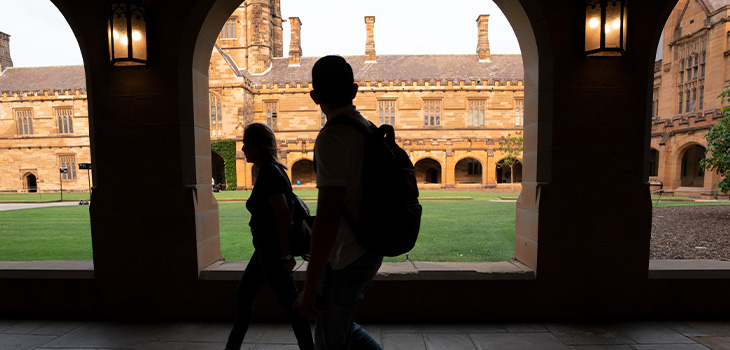

Diversity and inclusion are being championed across the healthcare and tertiary education sectors. The innovative problem-solving and unique insights that diverse minds bring to contemporary research and clinical practice are increasingly recognised in health and education settings.
However, a gap between this rhetorical welcome and the rigid, entrenched frameworks that continue to govern scholarly spaces persists. Lindsay et al.’s systematic review identified rates of disability disclosure below 5% among healthcare practitioners.1 Their review also found that workplace ableism operates at both institutional and individual levels to create powerful disincentives to self-identification, including fear of professional repercussions.¹
When a disabled or neurodivergent nursing researcher discloses disability or requests support, what follows is a hidden, compounding administrative and emotional burden. This ‘disclosure tax’ penalises vulnerability and actively undermines a researcher’s capacity to persevere in their professional pursuits.1,2
This disclosure tax is rooted in a pervasive binary within academic and clinical discourse: the assumption that a researcher is either a rigorous, objective professional or a subjective lived experience informant. Gray et al.’s scoping review of neurodivergent practitioners’ experiences in health professions education found that when nurses with disabilities bring their positionality into scholarly work, the default institutional response tends toward a profound suspicion of inherent bias.3 Nursing researchers with lived experience of their subject of focus are questioned on how they intend to maintain distance, manage their subjectivities, and prove their data trustworthy. The underlying implication suggests a systematic bias whereby a disabled or lived experience identity is, in itself, a barrier to professional objectivity. This institutional concern rests on the positivist assumption that typical researchers enter field settings devoid of preconceived ideas, personal assumptions, or unexamined systemic biases. Objectivity cannot be achieved through the erasure of the knowing subject but through the conscious, transparent acknowledgement of how positionality shapes interpretation: all inquiry is the work of situated knowers.4,5
Dismantling this false binary requires nursing institutions and research programs to engage with the crucial distinction between disability lived experience and disability lived expertise.6 Lived experience refers to the personal, embodied history of an individual condition; lived expertise is a sophisticated synthesis of that experience with collective community history, structural analysis of ableism, and the academic and policy skills required to redesign exclusionary environments.6 Disabled nurse researchers deploy exactly this kind of specialised knowledge, bringing an understanding of clinical reality that external investigators cannot replicate. Clifton et al. argue that when this contribution is categorised as mere subjective experience, ableist power structures systematically relegate it below traditional forms of scholarly knowledge, reducing what should be recognised as expert academic contribution to a tokenistic placeholder.6
This institutional devaluation of lived expertise does not remain conceptual; the suspicion that attaches to disabled researchers translates directly into disproportionate demands on how they conduct their work. Reeve’s extended Social-Relational Model of Disability exposes the operations of psycho-emotional disablism: the negative social attitudes and institutional practices that constrain not only what a nurse researcher can do, but who they are permitted to be.7 Applied to nursing research environments, this framework brings to light how requirements for hyper-detailed reflexive journalling, extended positionality statements, and repeated self-justification together constitute a secondary framework of mandatory surplus labour that typical researchers largely escape. These standard methodological tools, when disproportionately imposed, become instruments of psycho-emotional surveillance. The concern is not reflexivity as a legitimate mechanism for establishing methodological rigour; it is the weaponisation of reflexivity as a means of requiring neurodivergent and disabled researchers to continuously prove their neutrality in ways not imposed on their peers.
This hidden labour can be understood across three dimensions.8 Administrative labour encompasses formal documentation, self-advocacy to access basic structural support, and the navigation of complex institutional systems. Temporal labour is the research time lost to additional structural loops, explanatory paperwork, and compelled reflexive logs at the direct expense of core scholarly work. Emotional labour is the psychological weight of sustained institutional scrutiny alongside the significant cognitive effort of managing how one presents within a dominant culture.8 The nursing profession is losing invaluable scholarship not because disabled nurse researchers lack competence or commitment, but because the cumulative weight of these invisible demands makes long-term participation unsustainable.²˒³
To alleviate this burden, universities and research funding bodies should move away from deficit-based frameworks that treat disability as a pathological problem to be accommodated. Explicitly integrating the neurodiversity paradigm into nursing education and research foundations offers a basis for reshaping professional cultures and challenging the rigid standards of competence that do not meaningfully bear on research quality.9
Gray et al., examining implementation in health and social care settings, found that institutional rigidity, restrictive eligibility criteria, and limited organisational commitment continue to hinder neuro-affirming practice.10 Genuinely inclusive environments require systemic and cultural change: nursing research spaces that welcome diverse ways of thinking, and that remain open to the critical perspectives that follow.11
In practice, this means accessibility woven into institutional design. Universal design applied to research milestones, ethics applications, and reporting protocols benefits all nurse researchers, not only those with formal diagnoses.10 Flexible milestone timelines, structured communication guidelines, and designated administrative blocks can support executive functioning and reduce cognitive load without requiring individual justification.8
Lived expertise is not a liability to be managed through paternalistic administrative requirements, concealed from colleagues and research participants alike, or erased from the research record. It is a sophisticated analytical contribution, and a profound asset to reflexive, diverse nursing research teams. Disabled and neurodivergent nurse researchers bring a multi-layered understanding that bridges theoretical frameworks and lived clinical reality in ways that purely external analysis cannot replicate. Nursing institutions that absorb the structural burden of inclusion, rather than distributing it to those already carrying the burdens associated with disability in inaccessible systems, will gain access to the full depth of that expertise. The responsibility for building equitable scholarly spaces sits with institutions and the broader population of academics and scholars that actively shape these systems over time.
References
- Lindsay S, Fuentes K, Ragunathan S, Lamaj L, Dyson J. Ableism within health care professions: a systematic review of the experiences and impact of discrimination against health care providers with disabilities. Disability and Rehabilitation. 2023;45(17):2715-2731. https://doi.org/10.1080/09638288.2022.2107086
- Pohlmann MR, Hill PL. Scoping review of neurodiversity in nursing workplaces. Research in Neurodiversity. 2025;1:100007. https://doi.org/10.1016/j.rin.2025.100007
- Gray L, McNeill B, Pecora L, Macfarlane S, Hayley A, Hitch D, et al. Navigating neurodivergence: a scoping review to guide health professions educators. Medical Education. 2025;59(10):1037-1048. https://doi.org/10.1111/medu.15676
- Haraway D. Situated knowledges: the science question in feminism and the privilege of partial perspective. Feminist Studies. 1988;14(3):575-599. https://doi.org/10.2307/3178066
- Harding S. Whose Science? Whose Knowledge? Thinking from Women’s Lives. Cornell University Press; 1991.
- Clifton S, Cooper E, Bourke J, Connor S, Denton S, Dominish B, et al. Disability lived experience and expertise: recognising the expert contributions of people with disability. Evidence and Policy. 2025;21(4):578-595. https://doi.org/10.1332/17442648Y2025D000000060
- Reeve D. Psycho-emotional dimensions of disability and the social model. In: Barnes C, Mercer G, editors. Implementing the Social Model of Disability: Theory and Research. Leeds: The Disability Press; 2004. p. 83-100.
- Johnson JA, Ahluwalia S. Neurodiversity in the healthcare profession. Postgraduate Medical Journal. 2025;101(1192):167-171. https://doi.org/10.1093/postmj/qgae108
- Hedlund Å. The neurodiversity paradigm and the fundamentals of nursing. British Journal of Nursing. 2025;35(4):200-204. https://doi.org/10.12968/bjon.2025.0076
- Gray A, Maciver D, Curnow E, Johnston L, Rutherford M. Contextual factors influencing neuro-affirming practice: identifying what helps or hinders implementation in health and social care. Autism. 2025;29(12):3111-3123. https://doi.org/10.1177/13623613251360275
- Foster S. Creating neuroinclusive environments. British Journal of Nursing. 2026;35(6):294-296. https://doi.org/10.12968/bjon.2026.0107