


Healthier lifestyle changes may be less about starting from scratch and more about swapping one habit for another.
New research shows 66% of our actions are habitual, indicating that habit, not conscious choice, drives most of our daily actions.
The findings from the joint research, conducted by the University of Surrey, University of South Carolina and Australia’s CQUniversity, were published in Psychology & Health.
“Our study shows that two-thirds of what people do each day is sparked by habit, and the majority of the time those habits are intentional,” said Associate Professor Grace Vincent, a sleep scientist at CQUniversity’s Appleton Institute and a co-author on the study.
“This means that if we set out to create a positive habit, whether that’s around better sleep hygiene, or nutrition, or general wellbeing improvements, we can rely on an internal ‘autopilot’ to take over and help us maintain those habits.”
The research
The research team set out to assess how many everyday human behaviours are driven by habit. The team recruited 105 participants across Australia and the United Kingdom to complete six daily surveys on their moment-to-moment activities, over the course of a week.
The behaviours the participants were engaged in at the time of each survey prompt varied widely, with the most common activities including employment, education, or volunteer duties (21.7%), domestic or childcare activities (17.9%), screen time (17.2%), and eating or drinking (10.7%). Exercise came in at only 5.9%.
After coding and scoring the survey responses, authors found that most daily behaviours were habitually instigated, and 87.6% of habits were habitually executed.
“Many psychology models portray people as rational decision makers who carefully deliberate over the pros and cons of their options prior to choosing how to act,” said Associate Professor Amanda Rebar health promotion education and behaviour researcher.
“However, previous research has shown that one of the most reliable predictors of future behaviour is past behaviour. Further, much of this repetitive behaviour is undertaken with minimal forethought and is instead generated by the automatic influence of habit.”
Intentional actions are slow and effortful, whereas relying on habits leads to smooth and efficient behaviour that individuals can engage in through repetitive actions that require limited conscious awareness.
The researchers designed an ecological momentary assessment study to estimate the proportion of everyday behaviours that are actually habits.
They also looked at alignment between intentions and habits, concepts that are frequently portrayed as oppositional but are often complementary – likely because habits are typically formed through the repetition of an intended behaviour.
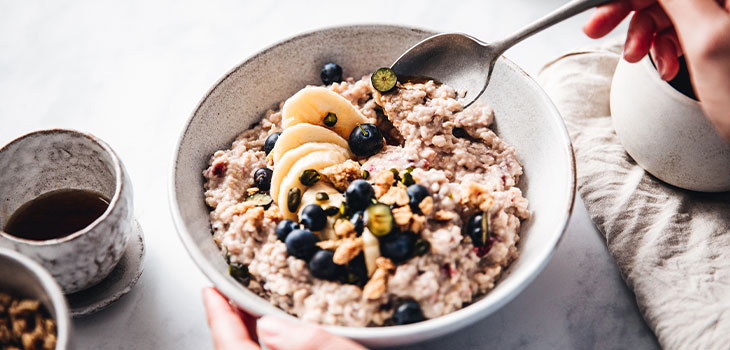
For example, switching from cereal to overnight oats might have started as an effortful, intentional action each morning but soon becomes a habit through repetition.
The notable outlier among the findings was exercise, which was more likely to be habitually instigated but less likely to be habitually executed. The researchers also discovered that 76.2% of daily behaviours were intentional, providing evidence of significant overlap (46%) between habits and intentions.
“Unfortunately, not all habits are created equal – exercise was the exception in our findings, which was often still triggered by habit, but less likely to be achieved by the participants ‘on autopilot’, compared to other behaviours,” said Associate Professor Grace Vincent, a sleep scientist with CQUniversity’s Appleton Institute.
“For people who want to break their bad habits, simply telling them to ‘try harder’ isn’t enough,” said Professor Benjamin Gardner, from the University of Surrey.
“To create lasting change, we must incorporate strategies to help people recognise and disrupt their unwanted habits and ideally form positive new ones in their place.”