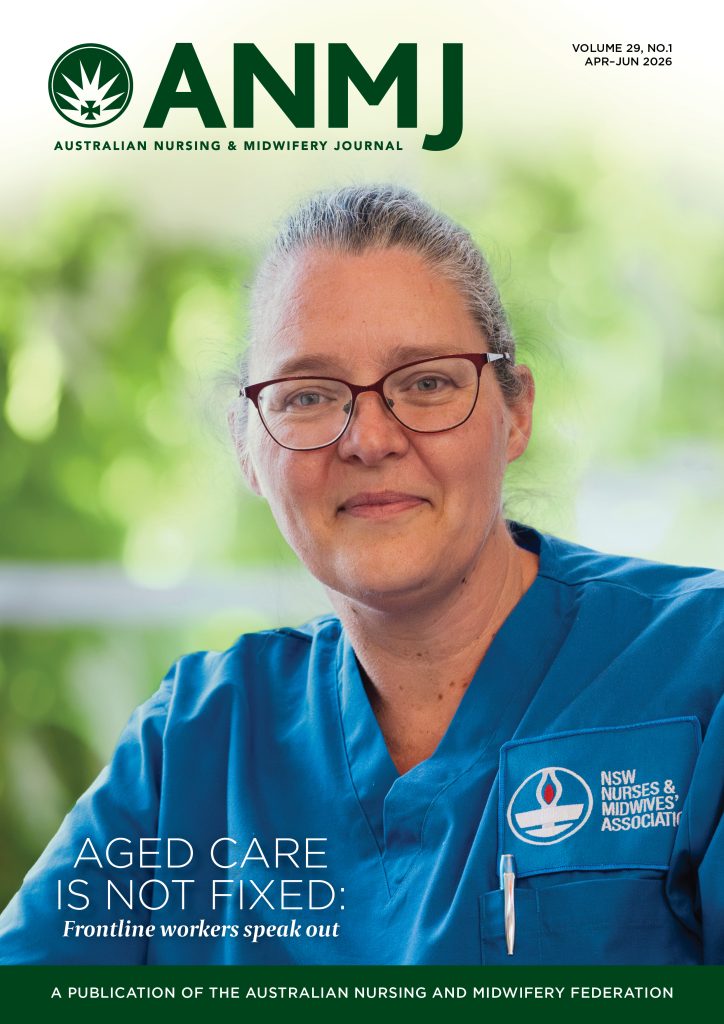



Over recent years, nurses, midwives and care workers have helped drive significant reforms made to healthcare and the professions they work in. This has included advances in gender equity; industrial relations reforms including wage increases through the Aged Care Work Value Case, stronger delegate rights; and long-awaited improvements in aged care with 24/7 registered nurse coverage and mandated care minutes.
Meanwhile there has been health reform that has expanded scope of practice for endorsed midwives and nurse practitioners while most recently RN prescribing standard has been introduced.
While these reforms mark real progress, their full impact is yet to be fully realised by those working on the ground. For example, some aged care providers are still failing to pass on the full wage increases to staff, even though they are funded by taxpayers to do so.
The ANMF remains focused on ensuring every reform translates into meaningful, tangible improvements for nurses, midwives, care workers, and the communities they serve. In 2026, our mission is clear: enforceable standards, fair pay, safer workplaces, and health centred policies that deliver genuine change on the floor, not just promises on paper.
The ANMF is actively shaping the future of aged care in Australia, focusing on raising care standards and ensuring the workforce is adequately supported to deliver high-quality services.
The federal government has implemented many of the Royal Commission’s 148 recommendations, including mandated minimum direct care minutes, 24/7 registered nurse coverage in residential facilities, the Australian National Aged Care Classification (AN-ACC) funding model, and the development of a new Aged Care Act.
Yet the real-world impact of these reforms on workloads, staff support, and care quality remains unclear.
Lannelle Bailey, a carer in aged care worker from NSW/Victoria who has worked in the sector since 2013, said mandated care minutes have improved outcomes. “Residents get the care they need, and we can identify changes more quickly with clinically trained staff.” However, some providers sometimes manipulate care minutes by assigning non-care tasks to carers, she said. “Residents aren’t getting the full time they deserve. It impacts us emotionally because we want to do more, but we’re limited by the time we have.”

The new Aged Care Act, effective 1 November 2025, establishes a clearer framework for quality, accountability, and transparency. While the ANMF welcomed its rights-based approach, it expressed disappointment at key omissions:
- No enforceable requirement for providers to employ adequate numbers of well-trained staff
- No recognition of the enrolled nurse role
- No national registration scheme for the unregulated aged care workforce
- No legislated mechanism to enforce accountability of government funding, including passing on wage increases in full
Further, there have been ongoing issues and concerns in aged care adversely affecting the recruitment and retention of aged care workers, said ANMF Federal Secretary Annie Butler. “Our members consistently report that safe workloads and the ability to deliver their best care are what matter most.”
She says despite reforms, it appears many providers continue to prioritise profit over care, resulting in poorer working conditions and suboptimal resident outcomes.
“Even with reforms like RN 24/7 and care minutes, there’s been no real regulation or consequences when employers fail to comply,” said ACT registered nurse Philip Ohman.
The ANMF believes there needs to be a comprehensive national review of the aged care system to assess the effectiveness of reforms following the Aged Care Royal Commission.
In October 2025, the ANMF launched a national survey of aged care workers, examining staffing levels, skill mix, funding, consumer safety, worker safety, and clinical safety. Results will guide advocacy and potentially a national aged care campaign throughout 2026.