
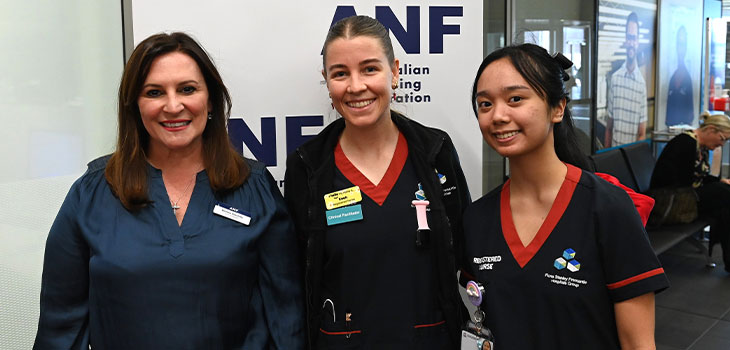

After three decades spanning corporate management, clinical nursing and health leadership, Romina Raschilla never expected to find herself at the helm of Western Australia’s largest union.
But following a turbulent period that has reshaped the Australian Nursing and Midwifery Federation WA, Ms Raschilla now leads a sweeping rebuild focused on what she describes as getting back to what matters most to members.
A first-generation Australian with Italian parents and three adult children, Ms Raschilla began her professional life outside healthcare, working in the corporate sector. It was after the birth of her third child that she made a decisive change, enrolling in a Bachelor of Science (Nursing) with the aim of becoming a midwife.
“I always wanted to work with families and once I started doing neonatal and paediatric shifts, I realised that was giving me the opportunity I was looking for – to care not only for the patient but also for their parents.”
Her nursing career took her across a broad range of specialties, including paediatrics, orthopaedics and cardiothoracic care, in both public and private hospitals. She later moved into regional and remote health, joining WA Country Health Service (WACHS) at the height of the COVID-19 pandemic.
For 18 months, Ms Raschilla worked on a critical project recruiting and deploying interstate agency nurses into rural and remote WA to protect vulnerable communities during the crisis.
“After that, I was an aged care facility manager. And I was still doing some shift work on a Friday night at a small private hospital.
“I’ve worked in almost every sector, so I genuinely understand the issues nurses and midwives face.”
At the same time, she completed an MBA specialising in human resource management, a qualification that has proved pivotal.
Driven to lead through advocacy
Ms Raschilla’s entry into union leadership in 2022 came from a strong desire to engage with members and ensure full advocacy on their behalf.
With so many challenges facing nurses and midwives across the workforce, she recognised the need to steer the union fully member-driven and member-led direction to be able to address their concerns and ensure the advancement of WA nurses and midwives and their professions.
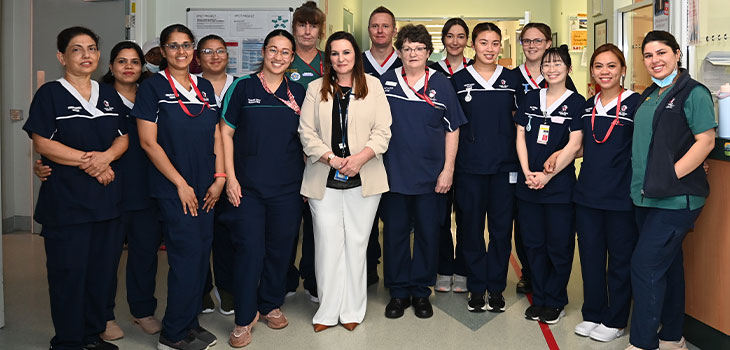
“My original intention was not to be sitting in this position. However, my council voted that I was the best-qualified person to take on the role and I take that responsibility very seriously. It’s a privilege to represent WA’s nurses and midwives,” said Ms Raschilla.
New direction for WA ANMF
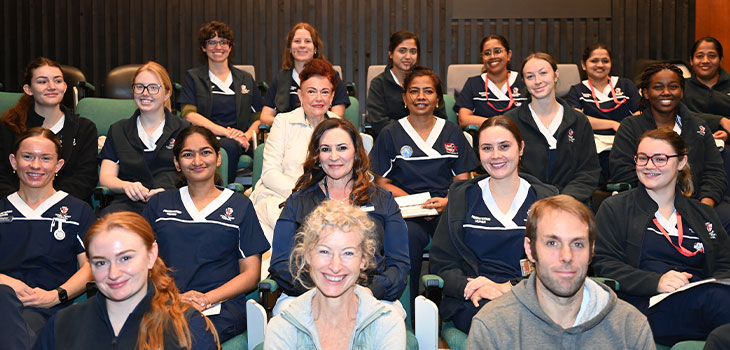
Since Ms Raschilla’s appointment, the union which is the largest in Western Australia with 43,000 members, has undergone rapid reform.
Governance systems have been overhauled, and communication has been rebuilt, with monthly newsletters and direct phone access replacing online-only appointment systems.
Members now make around 800 direct calls each month seeking industrial advice.
A key priority has been updating the union’s name to include the state’s valuable midwives and replace ‘Perth’ with ‘WA’ to better reflect the diverse membership base.
A formal delegate and organiser structure — standard across unions nationally — is being rolled out for the first time in decades. The union will hold its first delegates’ conference in many years in June, following its first AGM in 18 years, held last year.
“Members are learning what it means to be delegates, to organise, to advocate,” said Ms Raschilla. “And they’re excited.”
A bigger voice nationally
Relations with the national Federation have also been repaired. Support from branch union leaders across the country and the ANMF federal leadership team of Annie Butler, Sally-Anne Jones and Astrid Tiefholz, has been “overwhelming”, said Ms Raschilla.
Renewed engagement was on display last year when WA successfully bid to host the biennial national ANMF conference in 2027 — the first time the event will be held in Western Australia in its 36-year history.
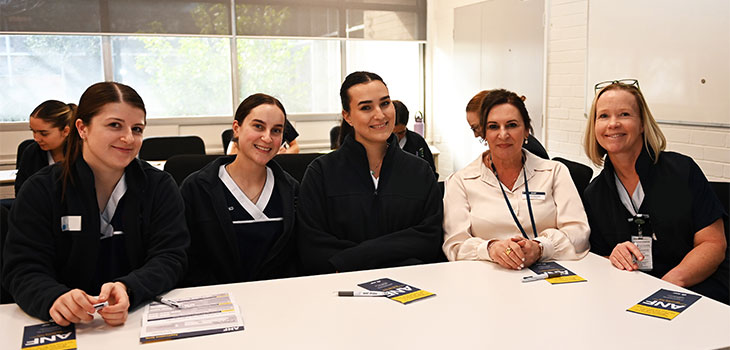
“It was an emotional moment for us because the whole room erupted into applause. The biennial conference is coming to WA in 2027 – we’ve never had it, it’s fantastic,” she said.
Fighting on multiple fronts
While rebuilding internally, the union is campaigning on major system-wide issues: legislated nurse-to-patient ratios, counting babies in patient numbers, ambulance ramping, aged care understaffing, and workforce retention – particularly in regional and remote WA.
“This state is enormous. We need real incentives and decent accommodation if we want experienced nurses to work regionally and stay there.”
The union recently joined forces with the Australian Medical Association, United Workers Union and Health Services Union to develop a five-point plan to address ramping, presented to the WA Government ahead of winter.
“A patient lying in a corridor doesn’t care whether it’s federal or state responsibility,” she said. “They just want dignity and care.”
Major enterprise bargaining rounds loom next year, including the public sector, Ramsay Health Care and St John of God Health Care, alongside more than 100 existing EBAs.
For Ms Raschilla, the work has been “like building a plane while flying it” but the energy from members and delegates makes it worthwhile.
“Our nurses, midwives and carers are incredibly resilient, but they’re tired,” she said. “They deserve a union that fights hard for them, so they can keep caring for the community safely and sustainably.”