
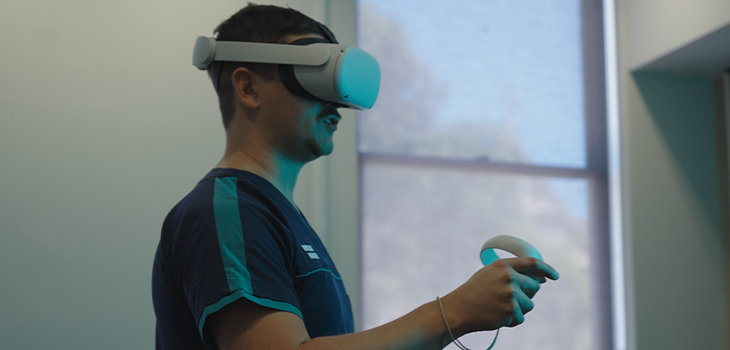

Nursing students are gaining confidence in managing aggressive patients thanks to innovative virtual reality (VR) training, new research from Edith Cowan University (ECU) has found.
The program, known as I-VADE, allows clinicians and students to practice de-escalation strategies in realistic, fully immersive scenarios before they encounter them on the clinical floor.
Participants navigate a simulated hospital scenario featuring an aggressive patient, Derek, who uses coarse language. They can experience the simulation in virtual reality or on a desktop. Players choose how to respond, with decisions leading to six possible outcomes – from Derek calming down to escalating anger and potential physical violence. Each choice shapes whether the situation is successfully deescalated or turns dangerous.
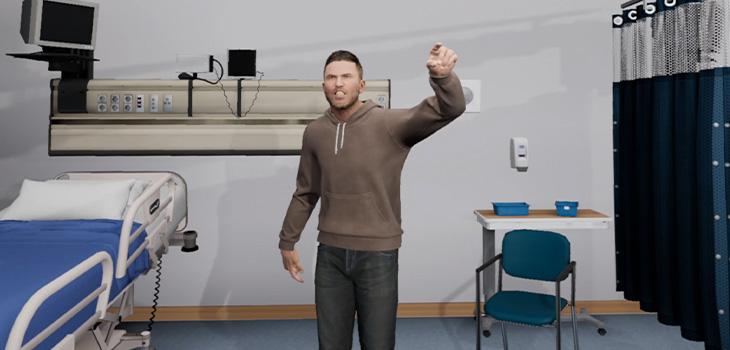
New research by ECU researchers into the program found that a single 20-minute VR training session could boost health professionals’ confidence in managing aggressive patients effectively.
The study involved 221 undergraduate nursing students completing the VR de-escalation training program, which was previously developed by the Simulation and Immersive Digital Technology Group at ECU in collaboration with a clinical advisory group of content specialists, including hospital-based work health and safety managers, workplace violence training co-ordinators, and experienced frontline healthcare workers.
During the study, nursing students were split into groups of 20, completing the VR training simultaneously on individual headsets, supported by as little as two trained facilitators to guide and debrief the experience.
“Training in aggression and violence de-escalation and management can effectively assist in preparing both students and clinicians to manage hostile patients, though there is limited evidence of widespread implementation of such training in Australian nursing and other patient-facing health and medical tertiary programs. Many clinicians feel inadequately prepared to navigate aggressive and violent situations upon entering the workforce,” PhD candidate, Joshua Johnson, said.
“We had an overwhelmingly positive response from the students that took part in the study. We found a statistically significant improvement in their confidence to manage patient aggression.”
“But the real take away from this study was the successful delivery of the program at scale in a real-world training setting.”
The I-Vade program is now being used in multiple locations across Australia to assist in the training of frontline healthcare workers.
ECU Associate Professor Mills said equipping health and medical professionals with the skills to recognise, de-escalate and safely manage aggression was no longer optional, it was essential to protecting both staff and patients.
“Frontline workers walk into unpredictable, high-pressure situations every day, and too often they’re expected to learn how to manage aggression on the job. That carries risks not only for their own safety and wellbeing, but for the quality-of-care patients receive,” he said.
“I-VADE offers a practical, standardised solution. It allows clinicians and students to really practise de-escalation strategies in realistic, fully immersive scenarios before they encounter them in the real world, where the stakes are high. By building confidence and capability in a safe environment, we can better prepare our frontline workforce, reduce harm, and create safer healthcare settings for everyone.”