
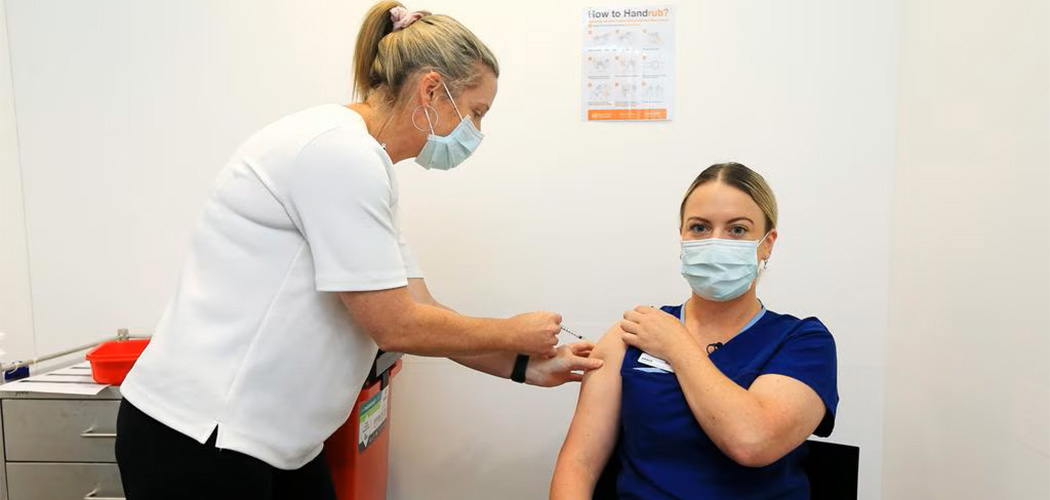

Nurse Practitioner Sonja Elia works in immunisation at Austin Health in Victoria. She speaks to the ANMJ about her career and speciality.
1 You’re Victoria’s first immunisation-specific Nurse Practitioner — what inspired you to specialise in this area?
As a nurse, I always wanted to make a difference. My grandparents lost a daughter to poliomyelitis in 1955, the year before the vaccine was introduced. I saw firsthand the grief that parents go through losing a child and it was lifelong. This inspired me to work in immunisation, to make sure that no other parent had to experience the loss of a child, particularly to a disease that is preventable. I love my role, and wouldn’t do anything else, and I find working within the community to share information about immunisations, vaccines and healthcare is one of my passions.
2 Tell us a little bit about your role?
As the Nurse Practitioner, Workforce Immunisation at Austin Health, I am the nursing lead of the staff vaccination and infectious diseases (ID) screening service. We provide vaccination services and ID screening for staff at commencement of employment and when boosters are needed. Additionally, I also provide education of staff, families and the community, conduct research, engage in specialty and role promotion as well as quality improvement activities.
3 Meningococcal disease, particularly MenB, remains a serious concern despite being vaccine-preventable. What makes this disease so dangerous?
Meningococcal disease is extremely dangerous because it progresses rapidly, has a high fatality rate and there is a potential for severe long-term complications, even with treatment. Initially, the clinical symptoms may be non-specific, such as fever, headache, muscle aches and pains and then escalate to life-threatening illness within hours. The characteristic rash of meningococcal disease does not disappear with gentle pressure on the skin, but the rash is not always present and is often a late sign. Even with prompt medical care such as antibiotic therapy, 5-10% of patients die from meningococcal disease. Around one-third of children and adolescents who survive develop permanent complications such as limb deformities, skin scarring, deafness and neurologic disabilities. Individuals most at risk of meningococcal disease are children less than 2 years of age, adolescents aged 15-24 years and Aboriginal and/or Torres Strait Islander people.
4 You’ve spoken about an “error of omission” in vaccine conversations. What do you mean by that?
A medical error of omission is an error resulting in an inappropriate increased risk of disease-related adverse event resulting from receiving too little treatment1. One example of this is failing to tell a patient about a vaccine that might save their life. I have listened to stories from parents who are frustrated and saddened that a clinician did not pass on information that could have made a vital difference. Parents who lost an infant to whooping cough because they were not aware vaccinating during pregnancy could have protected their newborn baby, adolescents contracting meningococcal disease because parents are unaware of the different strains. Every encounter with a health professional is an opportunity to review immunisation status and provide accurate and comprehensive information about vaccines.
5 How are nurses uniquely positioned to close this gap in meningococcal prevention?
Nurses are among the most trusted health professionals and can play a key role in preventing meningococcal disease. They help close gaps by raising awareness of the different strains of meningococcal disease, which is often misunderstood. Nurses educate patients and families about the severity of meningococcal disease, identify those who are at higher risk and promote the importance of vaccination. This was demonstrated at the Royal Children’s Hospital, Melbourne, where the introduction of an Immunisation Nurse Practitioner led to a 140% increase in Meningococcal B vaccine uptake2. The multifaceted role of nursing makes them indispensable in closing the gap in meningococcal prevention across Australia.
6 What does a typical day look like for you?
Every day is different, but a typical day involves me seeing patients in clinic and working with them to determine their vaccination needs, by looking at their health, age, lifestyle and occupation and then administering the required vaccines. I am often liaising with key stakeholders around the country to determine the best methods for improving vaccination coverage based on the latest research, especially for Aboriginal and/or Torres Strait Islander persons; planning for and delivering education in engaging ways; and exploring new research opportunities that can help improve vaccination rates.
7 What can health services do to better support nurses to lead on immunisation?
Health services can better support nurses to lead on immunisation by implementing a range of education, structural and policy strategies. Support regular updates and professional development opportunities to keep nurses current with vaccine science, schedules and communication strategies. Enable nurse-led clinics, to support nurse immunisers to operate independently within their scope, including administering vaccines under standing orders and simplify funding to allow nurses to lead immunisation services without relying on GP billing. Remove barriers that limit nurses from playing a key role in immunisation, for example, as a privately practicing Nurse Practitioner, I am still unable to provide COVID-19 vaccines, which is ridiculous.
8 What message would you like to share with your nursing colleagues about immunisation?
As nurses, we hold a powerful position in protecting our communities from vaccine-preventable diseases. Immunisation is not just a clinical task—it’s a cornerstone of public health, and we are its most trusted advocates.
Whether we’re educating families, administering vaccines, or supporting outreach in vulnerable populations, our role is vital in closing gaps in coverage and ensuring equitable access to protection—especially against diseases like meningococcal.
I thank nurses who show dedication and leadership in immunisation. You make a difference every day.
References
1 Hayward RA, Asch SM, Hogan MM, Hofer TP, Kerr EA. Sins of omission: getting too little medical care may be the greatest threat to patient safety. J Gen Intern Med. 2005 Aug;20(8):686-91. doi: 10.1111/j.1525-1497.2005.0152.x. PMID: 16050875; PMCID: PMC1490182.
2 Elia S, Perrett K, Newall F. Improving vaccination uptake with the implementation of an Immunisation Nurse Practitioner. Aust J Adv Nurs. 2021 May;38(2). doi:10.37464/2020.382.264.