

For women experiencing homelessness, pregnancy can be an overwhelming time filled with uncertainty and isolation.
That’s where The Cornelia Program steps in – a partnership between the Royal Women’s Hospital, HousingFirst and Launch Housing. The program offers a supportive pathway to safety and stability, providing secure accommodation, specialist maternity and neonatal care, and access to social and community supports.
Based in St Kilda, the program can support up to 36 women and their babies with apartments for up to 12 months.
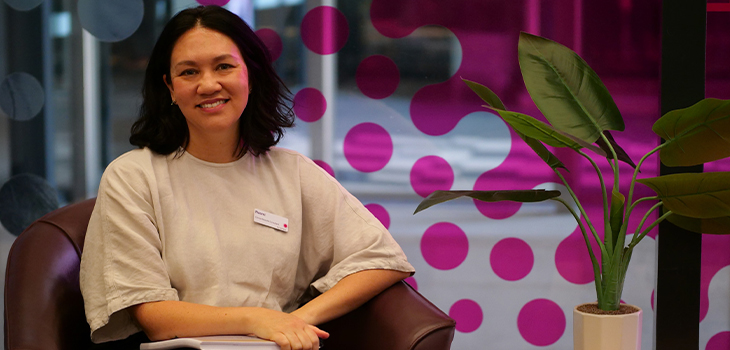
At the heart of the initiative is Clinical Midwife Consultant and ANMF (Victorian Branch) member Naomi Flynn, who helps pregnant women experiencing homelessness not only receive the maternity care they need, but also navigate access to broader health, psychosocial and long-term housing services.
“Pregnancy can be a really vulnerable time for women, particularly if they’re having their first baby,” explains Naomi.
“Not having a place to call home means you’re not really setting yourself up in a stable way. I think having a place to call home provides them [women] with that.”
According to Naomi, about 84% of women who access The Cornelia Program are experiencing family violence, while nearly 92% have a history of mental illness.
She says working within the unique program allows her to provide strong continuity of care and build trusted relationships throughout pregnancy and up to six weeks postnatal.
According to a new report, (New Beginnings: Transforming healthcare, social and housing support for pregnant women and their infants experiencing homelessness), more pregnant women, gender diverse parents and their infants experiencing homelessness need greater access to secure housing and intensive support across the housing and health systems.
The report, commissioned by the Pregnancy and Homelessness Coalition, collected data from 44 organisations in Victoria that provide direct services in health, homelessness, housing, family violence and youth sectors.
The report aims to improve knowledge of services, resources and approaches to assist workers and mothers and gender diverse parents to better access housing, maternal and healthcare services.
A consensus from nearly 50 agencies participating in the project reported the absence of state and federal policy frameworks to prioritise and invest in housing and support services for pregnant women and infants.
“The absence of leadership at both state and federal government and a failure to develop protective policies and practices for pregnant homeless women and their children can have dire consequences for mother and child,” according to Pregnancy and Homelessness Chair, Dr Theresa Lynch.
“It has an adverse impact on their health and wellbeing and attachment. It can lead to the unjust removal of children with devastating consequences. Our foremost concern is the lack of safe, secure and affordable housing combined with maternal and healthcare services – a major gap in the current service system.”
The Coalition is calling for The Cornelia Program model of care to be extended both within the state and nationally because it provides coordinated care across health and housing, with funding to be provided by state and federal health and housing departments.
Cornelia Program Manager, Sally Coutts, says early intervention during pregnancy can change the entire trajectory of a woman’s life.
“We see women come to us in incredibly difficult circumstances facing homelessness, family violence, and/or mental health challenges. The Cornelia Program gives them not just shelter, but dignity, support and a future.”
“This program is built on the idea that complex problems need coordinated solutions. Housing, healthcare, mental health and social support … all these elements must go hand in hand.”
Recommendations from the report include increasing the supply of safe, suitable and affordable long-term housing; ensuring pregnant homeless women have timely access to antenatal and continuity-of-care models in hospital and other health settings; and improving data collection to better identify the number of pregnant homeless women and gender diverse birthing parents to inform policy and service system development.
Naomi says vulnerable pregnant women experiencing homelessness show a lot of resilience and strength to put themselves forward for something like The Cornelia Program. For many, the wrap-around support can change their lives.
“It’s just the relationships that I get to build with these women and seeing them thrive and their babies thrive,” she says, when asked about the most rewarding part of the job.
“Witnessing their journey from when they move in and they have next to nothing. They might have low-confidence or self-esteem and just building them up and really creating this independence and confidence and resilience for them to be mothers and participants in the community. It’s just witnessing the whole journey – you don’t get to do that as a midwife very often.”
Read the full report here: Scoping-project-report_Pregnancy-and-Homelesssness-Coalition.pdf