
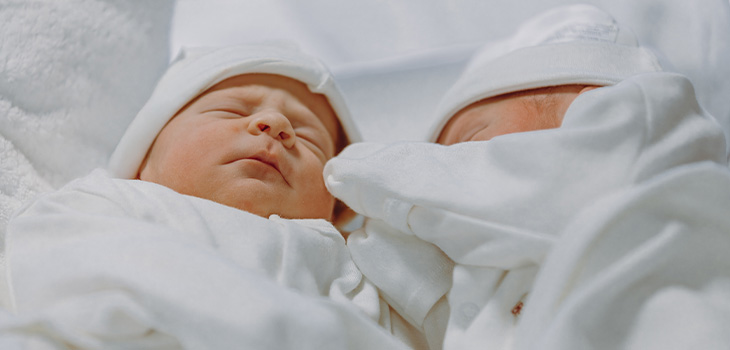

Women who receive the influenza or whooping cough vaccine during a twin pregnancy are not at higher risk of birth complications, new research shows.
The University of Queensland study, which showed 72% of women pregnant with twins were unvaccinated against influenza and whooping cough, has found the vaccines are safe and do not increase the risk of preterm birth, stillbirth or small-for-gestational-age infants.
Previous studies have provided data on the safety of vaccines in pregnant women but only focused on women carrying one baby, said UQ researcher Dr Lisa McHugh.
“Twin pregnancies carry higher risks and cannot be compared to singleton pregnancies in studies, and this is why we felt it was important to address this research gap.”
The study examined 11,435 infants born from 5,757 twin pregnancies in Queensland and Northern Territory over a 6-year period between 2012 to 2017.
Of these twin pregnancies, 72% of the women were unvaccinated against influenza and whooping cough.’
This compares to 67% of women with singleton pregnancies who were unvaccinated during the same period and location, as reported in the Links2HealthierBubs study.
Other figures showed only 2% of women pregnant with twins received the flu shot, and 16% received a whooping cough vaccine, compared to singleton pregnancies with 14% and 30% respectively.
“Our findings provide robust evidence that these vaccinations are safe and do not increase the risk of adverse birth outcomes,” said Dr McHugh.
The study found there was a 15% lower risk of small babies in whooping cough vaccinated pregnancies in Queensland, a 22% reduction in the risk of preterm birth in Northern Territory whooping cough vaccinated pregnancies, and a 7% lower risk of preterm birth in Queensland influenza vaccinated pregnancies.
Uptake of the vaccines which are fully funded for pregnant women under Australia’s National Immunisation Program could be improved, said lead author Kahlee Boyle, UQ epidemiologist.
“Vaccine confidence has also been severely impacted in recent years, fuelled by misinformation spread in Covid-19. Healthcare providers are crucial to influencing vaccine acceptance during pregnancy, and we want GPs to be able to tell patients there has been a local Australian study confirming the vaccines are safe.
Infants were more susceptible to severe influenza and whooping cough viruses due to their immature immune systems, she said.
“Babies born early or small may also have underdeveloped lungs, placing them at a much higher risk of a life-threatening illness if unvaccinated. When we consider how common it is for twins to be born early or small, it shows how important vaccine safety research is in twin pregnancies.
“But in equal measure, pregnant women experiencing respiratory illnesses like influenza are at a higher risk of hospitalisation, needing ICU care or dying, especially in the third trimester.”
The research is published in BJOG: An International Journal of Obstetrics and Gynaecology.