

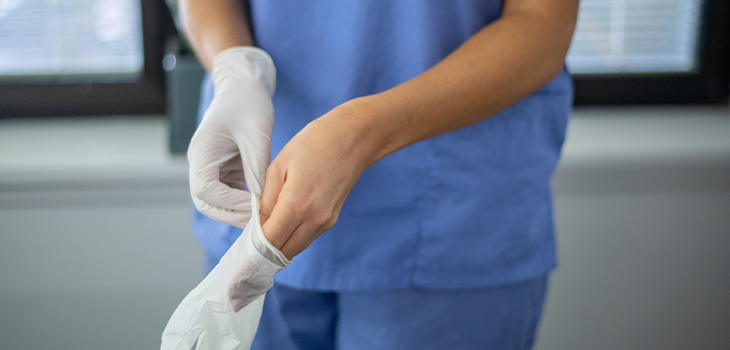

The indiscriminate use of non-sterile gloves in hospitals and clinics is significantly adding to environmental pollution and healthcare-associated infections, with little evidence to prove that there are substantial benefits, according to new research.
The lack of evidenced-based guidelines in the use of non-sterile gloves in healthcare could be impacting patient outcomes, healthcare costs, and environmental sustainability in healthcare, highlights the Edith Cown University (ECU) research.
While non-sterile gloves were necessary when there was a risk of touching body fluids that could carry viruses or bacteria or hazardous medications, there was no evidence to support the use of gloves for activities like moving patients, feeding, or basic washing or preparing many medications, said lead author Dr Natasya Raja Azlan, course coordinator at ECU School of Nursing and Midwifery.
“In fact, unnecessary glove use can be harmful. Staff are less likely to wash their hands, even though handwashing remains the best way to stop infections spreading. The result can be increased spread of harmful disease between vulnerable patients as well as healthcare staff.”
Evidence shows the inappropriate use of non-sterile gloves, including continued wearing when removal is required, is prevalent in nursing practice.
The abundant use of non-sterile gloves was also contributing to the cost of healthcare, said co-author Dr Lesley Andrew, Senior Lecturer and Master of Nursing course coordinator at ECU School of Nursing and Midwifery.
One New South Wales hospital saved $155,000 in a single year and reduced medical waste by eight tonnes following a decision to cut back on the use of non-sterile gloves.
“The disposal of healthcare products represents 7% of Australia’s national total carbon emissions, only slightly less than the 10% attributed to all road vehicles,” said Dr Andrew.
“Manufacturing these gloves consumes fossil fuels, water, and energy, while their disposal if through incineration can degrade air quality and release harmful chemicals. If sent to landfill, they may leach microparticles and heavy metals into soil and water systems, posing risks to both human health and the environment.”
Despite non-sterile glove use being a common and routinely taught practice during intravenous antimicrobial preparation and administration, there were currently no evidence-based guidelines or protocols in place to support or standardise this aspect of nursing care, said Dr Raja Azlan.
The lack of evidence-based protocols has prompted a call for a review into the practice.
A new collaboration led by ECU across all Western Australian universities, TAFE institutions, and healthcare providers is re-evaluating how to educate future nurses and midwives, ensuring they are prepared to deliver evidence-based care in an environmentally sustainable way. The study is open access published in the Journal of Advanced Nursing




6 Responses
Such worthwhile research not just for patients and nurses but for the environment. Well done to ECU.
I see it all the time. Nurses putting on gloves and leaving them on. They rarely wash their hands beforehand. I am an ex nurse and frequently have to tell nurses and doctors to wash their hands
Could you please post where your references are from ? Thanks
Hi Annette, there’s a link to the full study at the bottom of the article. Thanks, ANMJ
In other workplaces such as construction industry where safety gloves are mandated health risks exist especially where the same gloves are worn repeatedly for many days.
Dermatitis, fungal and bacterial infections can occur. Cleaning staff in hospitals can have the same pair of gloves on for longer than desired.
I used information from several sources and had the glove policy changed on a construction site via the weekly OHS meetings
Random, regular re- training for all health professionals on successful handwashing techniques. Always very telling when a contrast and uv light highlight areas missed. Usually the same parts of hands-skin not washed effectively is stained…by the dye and obviously not clean…. Especially the base of nails, b/w fingers and along outer aspect of pinkie down to wrist. Repeat training. Let’s not forget history: more mothers and infants survived and thrived after childbirth aided by a midwife as opposed to a doctor…. Why? The midwives washed their hands regularly! Their doctors counterparts seldom hand washed before a procedure or b/w deliveries. I’m ashamed and disappointed if nurses are no longer leading the way in good practice. Surely Covid reminded us to remain vigilant. Yes, I would get contact dermatitis on my hands from frequent hand washes and glove wearing but found ways to avoid this with soap alternatives, powerless gloves, cotton glove liners… none of this helped much in tropical areas. Sweat dripping off me, glove fingers filled with my own sweat and useless! Keep handwashing! Soap and water is cheap and effective. Don’t get me started with food safety … gloves worn to make your sandwich then polluted with touching cash, cards, eftpos machine …next (Mackas encourage staff to leave their gloves on … they don’t emphasise handwashing instead. It takes 3 mins so it’s more time efficient not to handwash. Just leave the non- sterile gloves on and cross contaminate, scratch ya head, wipe ya nose, handle money and food. Many don’t wash hands after toileting… ever!