


As part of our 2025 stocktake, we’re so proud of our collective wins that shifted practice, policy and representation of nurses, midwives and carers in the climate and health space.
This work came from the ground up, from nurses, midwives and carers! We spoke with healthcare workers, cross-checked evidence, linked teams across states, and built recommendations to help us respond to real-world pressures and shape policy. Here are our top five wins – looking at how the ANMF Federal Office and Branches collectively worked to move the dial on climate and health.
1. We established our first ever ANMF Climate and Health Unit (the CAHU)
We know from evidence that we get further if we work side-by-side. So we set up the CaHU, where Federal and ANMF Branches check in with each other and share what we’re learning from nurses, midwives and carers on the ground. It helps us figure out the best way to bring our Climate and Health Strategy to life in a way that actually makes sense for all our workforces around Australia. And best of all it means we don’t have to reinvent the wheel. We can lean on each other’s strengths – which means we have more time to hone our expertise in specific areas of environmental policy, research and engagement.
2. Nurses and Midwives hit the Main Stage
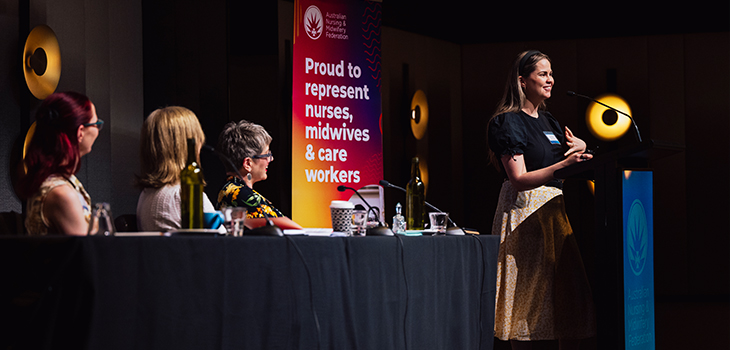
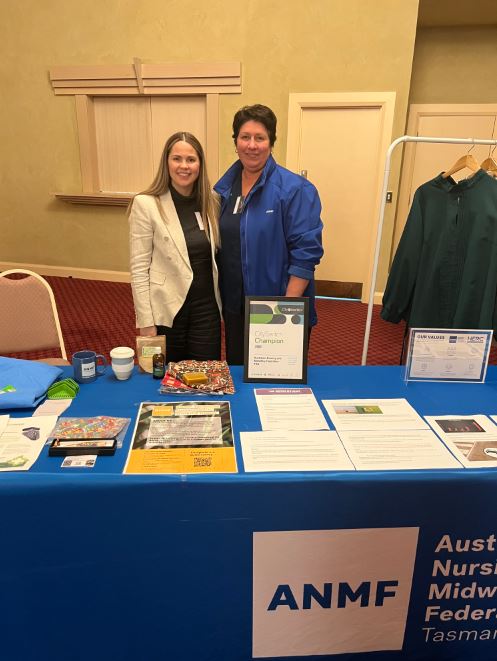
Each year, ANMF Branches bring thousands of nurses and midwives together at professional days, conferences and seminars. In 2025, these events became one of the strongest signals that climate change is now core business for our professions.
Nurses, midwives and carers got to participate:
- Nationally: Representatives from the ANMF spoke about climate change at national conferences, including the ANMF Biennial National Delegates Conference and the Nursing and Midwifery Planetary Health Collaborative Symposium.
- In NSW: The Environmental Health and Sustainability Seminar brought members together for practical education and discussion on sustainability initiatives in healthcare. NSW also featured climate change in their Professional Day, exploring how climate change is reshaping the frontline role of nurses and midwives.
- In Queensland – The Peace and Social Justice Conference (QNMU) spotlighted climate as a human health issue, including a session on protecting communities from climate-related health impacts, and screening the inspirational film, Turning the Ship – Rising Tide 2024 People’s Blockade of the World’s Largest Coal Port.
- Victoria – The Health and Environmental Sustainability Conference 2025
full-day conference showcased leadership roles, protected sustainability time and clinical innovations that reduce emissions and waste.
Collectively, we reached thousands of nurses, midwives and carers as well as academics, policy-makers and decision-makers. Common threads emerged. Practical action was front and centre: the power of our collective advocacy, waste reduction, evaluating low-value care, prioritising energy efficiency, infection control and carbon-footprinting of clinical pathways. Climate action is now part of our professional identity and scope, not an optional add-on. Nurses and midwives are calling for formalised roles, structures and protected time to lead sustainability work.
3. We Put Plastics on Notice
In 2025 our team partnered with the Climate and Health Alliance to publish Health ready to cycle away from plastics: Case studies from the floor. We documented healthcare worker-led initiatives such as swapping single-use items for validated reusables, closing loops on PVC recycling, standardising instrument packs and urging supplier take-back of packaging. The report spotlights the strong motivation among healthcare workers to act and highlights the urgent need for stable funding, clear policy, shared procurement standards and more robust data to scale these efforts across health systems.
4. We helped build Australia’s Climate Safety Plan
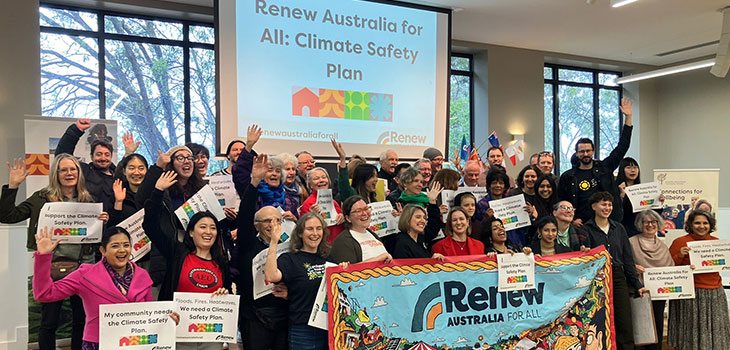
We collaborated to build a national Climate Safety Plan with 80 of Australia’s leading organisations and advocates for climate action. The Plan lays out concrete steps for climate change adaptation and resilience to climate-proof homes, workplaces, schools and health services; strengthen community support systems; protect workers from extreme heat and pollution; and secure food, water and social safety for all. It calls on government to invest now in resilience, not just to avoid disaster, but to safeguard public health, equity and community well-being for the long term. Our launches caused a splash in the media. reaching audiences of over 1.5 million!
5. We had prolific representation of nurses, midwives and carers in research and policy
We codeveloped Australia’s health policy priorities with The Lancet Countdown, publishing national priorities to protect communities and the health workforce. Building on the 2025 Report of the Lancet Countdown, our policy priorities report calls on the Australian Government to: develop a National Clean Air Framework for Health, fund the implementation of the National Health and Climate Strategy, and redirect fossil fuel subsidies towards health and climate resilience. You can rewatch the launch of this Policy document webinar. We held seats in key policy forums, ensuring nursing, midwifery and carer expertise shaped submissions and strategy. Alongside this, we published seven articles in the ANMJ, detailing the latest key research and policy moments.
Conclusion
As 2025 wraps up, we hope our work speaks for itself. Nurses, midwives and carers are represented on climate change now more than ever before. We are shifting plastics out of patient care, backing national Climate Safety Plans with our partners and brining nursing and midwifery into Federal climate policy. None of it was fast. But all of it was necessary.
Our 2025 wins are not isolated victories; they’re stepping stones toward a health system that is climate-resilient, equitable and future ready. The urgency is real and so is our resolve. Already we’re planning a big 2026, and we need your help, support, knowledge and engagement.
Climate action isn’t an optional extra for nurses, midwives and carers, it’s core business, and it’s in our hands. Our new year’s resolution? 2026 is our year to lead. Nurses, midwives and carers will drive climate action, set the standard and show Australia that health leadership starts with us!
Contributions the article (and work) by: Catelyn Richards, Melanie Eslick, Emma Hardy, Lauren Wood-Smith, Nicki Hood, Roslyn Morgan, Matilda Weatherspoon and Janet Baillie.



One Response
What a wonderful start to developing climate change practice and policies that will make a big difference for nurses and midwives at a national level.