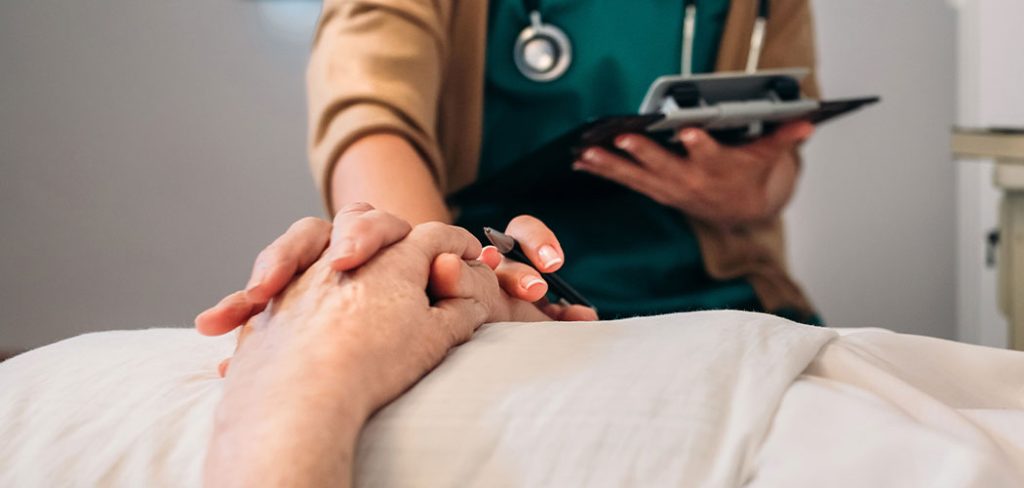


Nurses are playing an increasingly important role in voluntary assisted dying (VAD), helping patients navigate end-of-life choices while developing new models of care that improve access, safety and support.
Speaking at a recent Go Gentle VAD conference in Melbourne, ANMF Assistant to the Federal Secretary (Strategies and Campaigns) Alana Ginnivan highlighted how nurses are shaping VAD care, drawing on their established skills in advocacy, education and compassionate support, and the expanding opportunities for nurses to further contribute to the provision of this care.
During a panel discussion, with Go Gentle founding Director Andrew Denton, Ms Ginnivan commended nurses actively providing care in this space by acknowledging the extraordinary work of nurse practitioners, clinical nurse consultants and nursing leaders who are not simply participating in VAD, but actively redefining care.
“They are developing new models of care, reimagining service delivery that is co-designed, culturally responsive and safe, while challenging us to ask important questions,” she said.
However, Ms Ginnivan acknowledged that the implementation of VAD had not been without challenges, with apprehension and stigma among practitioners presenting significant barriers.
Drawing on her experience as a Victorian nurse, Ms Ginnivan recalled when the legislation came into effect. She said what should have been recognised as a significant milestone in patient choice was, for many healthcare professionals, overshadowed by uncertainty about what the legislation meant for their practice.
“Rather than understanding what nurses could do, nurses were often left concerned about what they couldn’t do, with fears about professional registration and uncertainty about whether they could even discuss VAD with patients.”
While Ms Ginnivan said, things had significantly improved over time, stigma persisted and VAD remained unfamiliar territory for many nurses that don’t have exposure or aren’t working directly in palliative care or the VAD services.
Yet Ms Ginnivan argued that nurses were well placed to provide VAD care.
“Nurses are already inherent advocates, educators, translators, coordinators and carers. Integrating VAD into mainstream care pathways doesn’t require nurses to become something different,” she said. “We are often the people having conversations that help patients and families make sense of what lies ahead.
“Supporting VAD builds new skills, relationships and values that have always been at the heart of nursing.”
Ms Ginnivan said she remained optimistic about the growth, capability and opportunities emerging within the VAD workforce. “Bringing VAD into mainstream care is about embedding it alongside palliative care as part of the broader spectrum of end-of-life choices,” she said. “It’s about empowering and enabling nurses to draw on the skills they already bring every day: listening, advocating, educating, caring, and continue walking beside people and their loved ones during some of life’s most profound moments.”