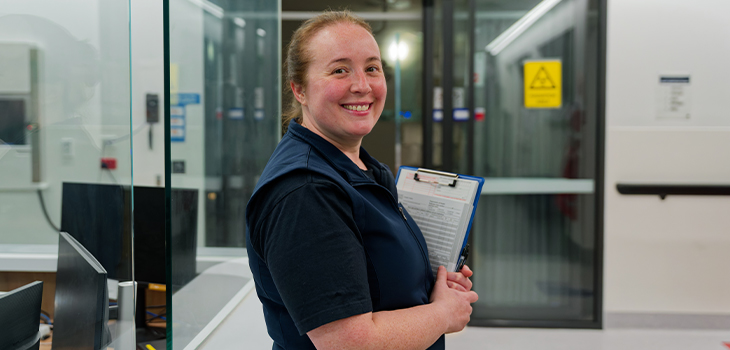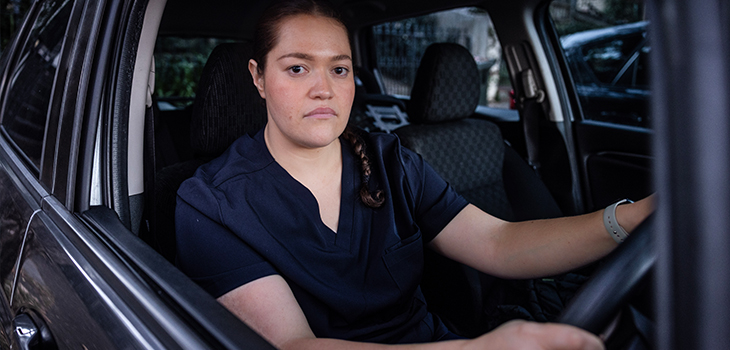


Heidi Crisp’s career in nursing and midwifery evolved through a series of pivotal moments – some joyful, some heartbreaking – that has ultimately led her from a Sydney hospital ward to remote Aboriginal communities, and now to the leadership of the ANMF Northern Territory Branch.
Crisp began her nursing career after studying at the University of Newcastle before undertaking her graduate year at Sydney’s Royal Prince Alfred Hospital (RPA). It was there, around 2001, that she first encountered union activism through then-job delegate and now NSWNMA Branch Secretary Michael Whaites.
“I think I’ve always been a really passionate unionist; my parents were teachers. I remember Michael coming and really rallying us in Sydney.
“As a new graduate I was on $30,000 a year. I was earning only about $2 an hour more as a nurse than I had working in a coffee shop. I was looking after really sick people, and it seemed absurd that the pay difference was so small.”
After working overseas and meeting her future husband in Scotland, Crisp returned to Australia. She took on casual nursing work and, by her own admission, was close to leaving the profession altogether. Then came a chance moment while working on an island in the Whitsundays.
“I was driving a buggy around the island and thought, ‘Maybe I should do midwifery.’ I rang Newcastle University and found out the course was starting in only a few weeks. That was it.”
After completing graduate midwifery training in Tasmania, she and her husband headed to Alice Springs for what was supposed to be a three-month adventure to escape the Tasmanian winter. “Within about two days of working there, I just knew that it was me and I loved the work.”
A passion for remote maternity care
Alice Springs introduced Crisp to a different model of maternity care, one deeply connected to Aboriginal culture and community. The contrast with practices she had seen elsewhere was profound. “Babies weren’t crying all night because they were right there with their mothers, feeding whenever they needed to.”
After working in maternity services, Crisp moved into primary healthcare and women’s health, eventually taking up a role as an outreach midwife with Nganampa Health Council in the APY Lands of remote South Australia.
For more than a decade, she travelled from Alice Springs into remote communities, delivering maternal and women’s health services. “It wasn’t just clinical work. A lot of the role was relationship-building, problem-solving and helping women navigate their circumstances.”

Providing healthcare often meant negotiating transport, family responsibilities and cultural obligations. “To organise something as simple as an ultrasound could take a huge amount of planning. You had to understand what mattered to that woman, where her family was, what was happening in community and work with that reality.”
The work could be frustrating. Despite years of effort, Crisp sometimes questioned whether meaningful change was occurring. “It does feel meaningful when you’re there, but the health disparities remain enormous. The healthcare needs just keep growing.”
Yet she also experienced moments of extraordinary connection. “You’d arrive in community and people would already know you were there. Word travelled quickly. All the women would turn up on the first day wanting to be seen because they trusted you.”
Tragedy that shaped a lifelong advocacy
One of the most significant moments of Crisp’s career came with the murder of her colleague, remote area nurse Gayle Woodford, in 2016.
Woodford was working in the APY Lands community of Fregon when she was killed while on duty. The tragedy profoundly affected health professionals across remote Australia. “I think it affects me more now than it did at the time,” she said.
She remembers trying to contact Woodford shortly before she disappeared to discuss a maternity patient. “When we first heard someone was missing, we assumed it was probably a locum nurse who’d become lost on a dirt road. Nobody imagined what had actually happened.”
In the aftermath, some healthcare workers left remote practice entirely. Others struggled with the decision to reopen services. “It was heart-wrenching. You kind of just keep going at time,” she said.
The experience has become a driving force behind Crisp’s commitment to workplace safety.
“That’s why I’m so passionate about violence and aggression prevention now. I think about Gayle often and wonder why we always seem to wait until someone is seriously injured or killed before action is taken.”
She says repeated exposure to trauma, violence and disadvantage can take a significant emotional toll on nurses and midwives working remote. “It changes you. There were times when I felt I’d lost my capacity to cope with some of the stories, I was hearing. The impact of that work is enormous.”
Stepping into union leadership
Although Crisp had always been a union member, living and working remotely often left her feeling disconnected from the broader union movement.
That changed in 2025 when she became a job delegate within community health services in Alice Springs and attended ANMF training and then the ANMF National Biennial Conference in Sydney in 2023. “For the first time I really understood how the union operated.”
During that period, she met then-NT Branch Secretary Cath Hatcher and learned she was planning to retire. “I realised this was a leadership role rather than a management role. I’ve never wanted to be a manager, but leadership felt different.”
Encouraged by colleagues, Crisp nominated for the position and was elected. A key motivation was her desire to represent nurses working in remote and rural areas.
“I represent people who often aren’t represented. Remote nurses make up a huge part of the Northern Territory workforce, and I understand their realities because I’ve lived them.”
One of her early initiatives was holding online meetings specifically for remote area nurses. “The response was incredible. People were genuinely excited because nobody had reached out to them in that way before.”

Fighting for safer workplaces
As Branch Secretary, workplace safety has become a major priority. This month, the NT Branch is launching a comprehensive campaign to address workplace violence and aggression across healthcare settings.
The campaign draws on ANMF Victoria’s 10-point plan while being adapted to the unique challenges of the Northern Territory. “Saying you’re addressing violence isn’t enough. There has to be accountability,” says Crisp.
Alongside safety reforms, Crisp is also leading negotiations for a new enterprise agreement, with workforce shortages and pay competitiveness high on the agenda. “Other states have achieved significant pay increases and we’ve fallen behind. Our staffing shortages show that clearly.”
She also wants to see stronger support for remote nurses and eventually establish a permanent ANMF presence in Alice Springs. “That’s where my roots are. It’s important that remote members feel seen and heard.”
Home in the desert
Despite recently relocating to Darwin for her role, Alice Springs remains home in Crisp’s heart.

“We were there for 18 years. My son (aged 11) was born there and, although my daughter (aged 14) was born during a brief stint in Perth, both kids consider Alice Springs home. My daughter would go back tomorrow if she could.”
What keeps drawing Crisp back is the community spirit she believes is unique to Central Australia.
“It gets into your bones. There’s something special about Alice Springs. Everything feels community-led, grassroots and welcoming.”
Whether through local choirs, sport or community events, the town creates a sense of belonging that is hard to replicate elsewhere, she said.
For Crisp, the same sense of connection has defined her entire career – from remote maternity clinics to union leadership.
“I’m hugely passionate about nursing and midwifery. This felt like such an important change of direction for me that I could be looking after nurses and midwives rather than looking after clients. And it feels like it is needed. People want to connect – they want to know who you are and how you’re going to represent them – I’m learning so much all the time.”